01/29/2026 - Oliver Hagenlocher - Customer Stories
Retrofit as a strategic manufacturing approach: VSC 400 DDS in the small series production of precision gears at EWS Weigele
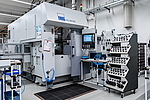
Machine retrofitting is often seen as a stopgap solution - a compromise between a limited budget and the desire for modern production technology. However, EWS Weigele GmbH & Co KG in Uhingen shows that this view falls short. Together with EMAG, the company has specifically modernized a VSC 400 DDS and adapted it to its individual production requirements. This has created a manufacturing solution that is at least on a par with a new investment in terms of process reliability, availability and cost-effectiveness. The decisive difference: the retrofit was not chosen out of necessity, but as a deliberate technological strategy.
Images



Retrofit strategy: availability as a competitive factor
EWS Weigele manufactures high-precision tool holder systems with an in-house production depth of 90 to 95 percent - from the raw material to the assembled product. An essential part of this production chain is the manufacture of bevel gears and spur gears for driven tool units. The typical batch size structure is two to five workpieces per order.
With this high level of vertical integration, any machine downtime has a direct impact on delivery capability. When the existing gear production had to be modernized, the central question was not only "Which technology?", but above all "How fast?".
The decision to retrofit the VSC 400 DDS was based on a clear calculation: the delivery time for a comparable new machine would have been eight to twelve months, plus several weeks for commissioning and process qualification. The retrofit made it possible to resume production after just a few weeks. The basic mechanical structure of the machine was intact and the employees were familiar with the machine concept - ideal conditions for a quick modernization.
Technological upgrade: automation and pick-up
The retrofit included the complete technological modernization while retaining the basic mechanical structure:
Control technology: replacement with an up-to-date CNC system with extended functions and interfaces for production data acquisition. The new control system enables direct integration into the digital production management system.
Automation interfaces: Adaptation of the machine-side interfaces to the Varia quick-change system used at the factory and the workpiece feed via a rotary indexing conveyor belt.
The capital investments were around 70 percent of a comparable new machine - with full technological performance.
Pick-up principle: process stability through mechanical guidance
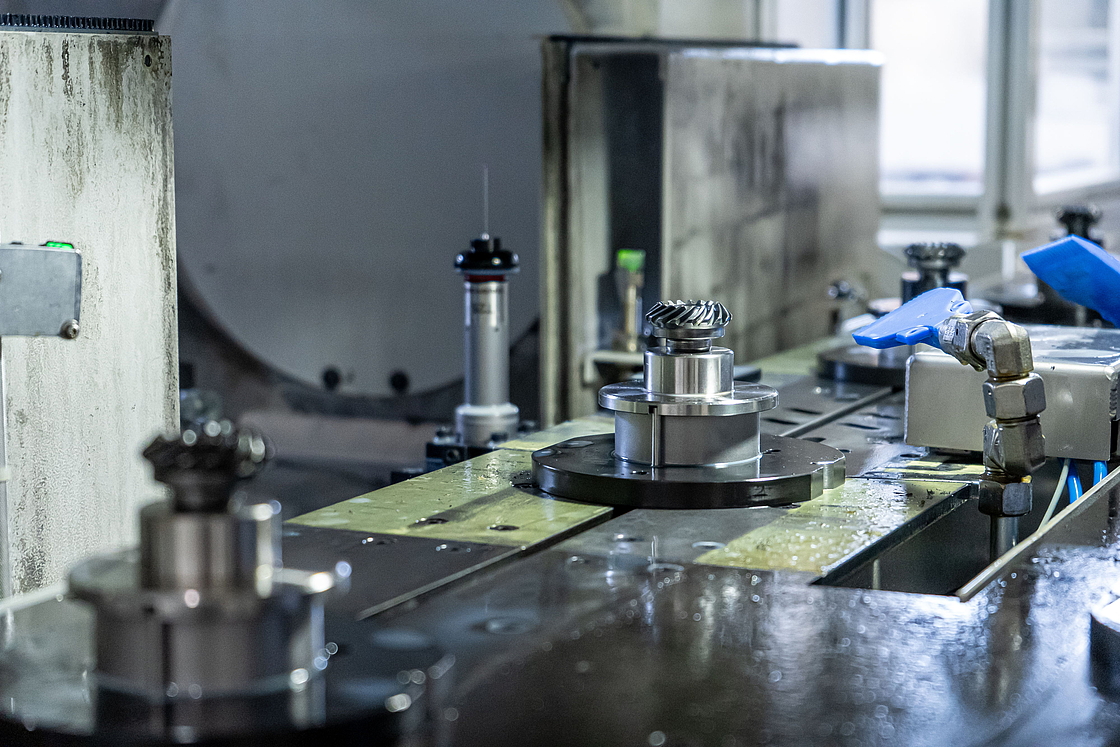
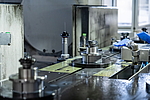
The VSC 400 DDS is based on the concept of a vertical pick-up turning machine with a pick-up spindle. The workpiece is not inserted into a chuck manually or by a robot, but is picked up from a defined position by the work spindle itself. The gears are located on a workpiece carrier in the rotary indexing conveyor system. The work spindle grips the workpiece from the pick-up station and transports it into the work area.
This process eliminates insertion inaccuracies. The repeat accuracy of the workpiece pick-up is in the range of a few micrometers, as the positioning is mechanically defined by the workpiece carrier geometry. In contrast to robot systems with grippers, insertion errors due to contamination, workpiece mix-ups or recognition errors are ruled out by design.
The process stability is demonstrated in practice: At EWS, the complete hard machining of the gears is carried out on the VSC 400 DDS - hard turning with PCD or CBN tools, grinding of defined functional surfaces and final finishing. Batches of several dozen workpieces are produced without intermediate measurement. The required tolerances are maintained over the entire batch.
Varia quick-change system: set-up times in minutes
With batches of two to five workpieces and processing times of 4 to 7 minutes per component, the pure processing time per batch is between 20 and 100 minutes. Conventional set-up times of two hours would destroy the economic efficiency.
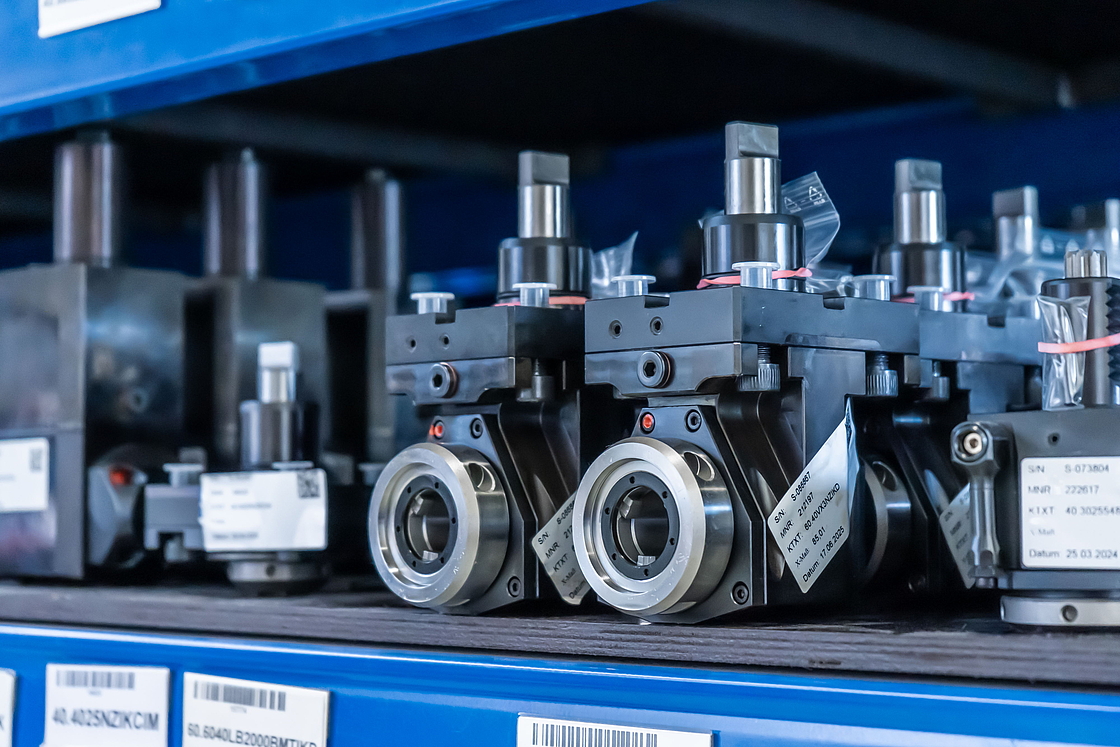
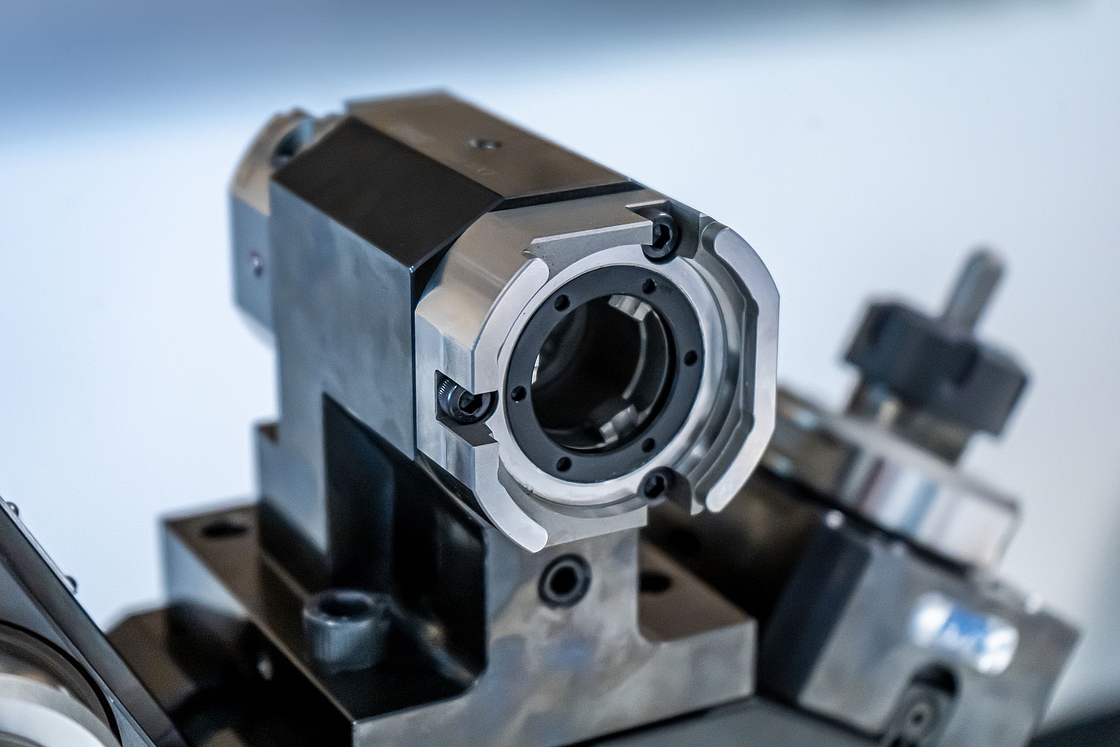
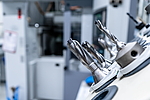
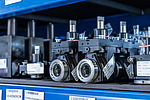
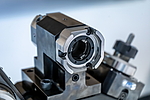
EWS uses its own Varia quick-change system, available in three standardized sizes (VX3, VX4, V5). The system is based on a bayonet lock with a defined tightening torque. The repeat accuracy is in the range of a few micrometers. Both static and driven tools can be accommodated.
The tool change takes place according to a well thought-out sequence: While the machine is running, the tools for the next job are installed in Varia holders outside the machine, measured and inserted into a tool shuttle. The tool data is transferred to the control system. CAM programming is carried out with digital twins of the tools so that collision checks are carried out before the physical changeover.
Once the current job is complete, the tools are removed from the tool shuttle and inserted into the turret positions via the bayonet lock. The mechanical changing process takes a few seconds per tool. The machine downtime for job changes is reduced to 5 to 10 minutes for a complete turret.
Automation: Three hours of unmanned operation
The rotary indexing conveyor system holds workpieces for up to three hours of unmanned operation. The workpieces are placed on workpiece carriers, which ensure a defined contact surface and positioning. The operator loads the conveyor belt at the start of the shift and can devote himself to other activities during the processing time.
This form of "flexible automation" enables economical machine operation even with small batches - a decisive difference to large-scale automation, where dedicated systems only pay for themselves with high quantities.
Digital production control: from the CAM system to the machine
Production is based on an end-to-end digital process. Every tool and every tool holder exists as a digital twin in the system. The NC programs are created with CAM software, using not abstract tool geometries but the exact digital models of the tool holders actually used.
This enables collision checking as early as the programming phase, tool path optimization based on actual tool dimensions and automatic generation of setup data. The operator receives a digital set-up list that specifies exactly which tools are to be set up and in which order. This system minimizes set-up errors and significantly reduces the training time for new employees.
Quality assurance through process stability
At EWS, quality is not ensured by measuring, but by process stability. The combination of process stability of the pick-up principle, repeat accuracy of the Varia tool system and thermal stability of the vertical machine enables the production of gears with tolerances in the micrometer range - without 100 percent control.
The statistical process capability is monitored by regular spot checks. Only when the measured values show that the process is stable is individual testing dispensed with. This production strategy significantly reduces lead times and quality assurance costs.
Retrofit as a conscious technological decision
The EWS project shows that retrofitting is not an emergency solution, but can be a technically and economically superior alternative to a new investment - especially if the basic mechanical structure can still be used for decades. The key benefits:
Availability: Production resumption after weeks instead of months. A decisive competitive factor with a high in-house production depth.
Process reliability: Pick-up principle eliminates insertion inaccuracies. Tight tolerances are maintained without intermediate measurement.
Flexibility: Quick-change system reduces set-up times to minutes. Frequent product changes become economically viable.
Cost-effectiveness: Capital investments at around 70 percent of a new machine with comparable performance.
Sustainability: Machine service life extended by 10 to 15 years with significantly reduced resource consumption.
For manufacturing companies with small series production, high quality requirements and high in-house production depth, the concept offers a tried-and-tested approach to modernizing production technology.
About EWS Weigele GmbH & Co KG
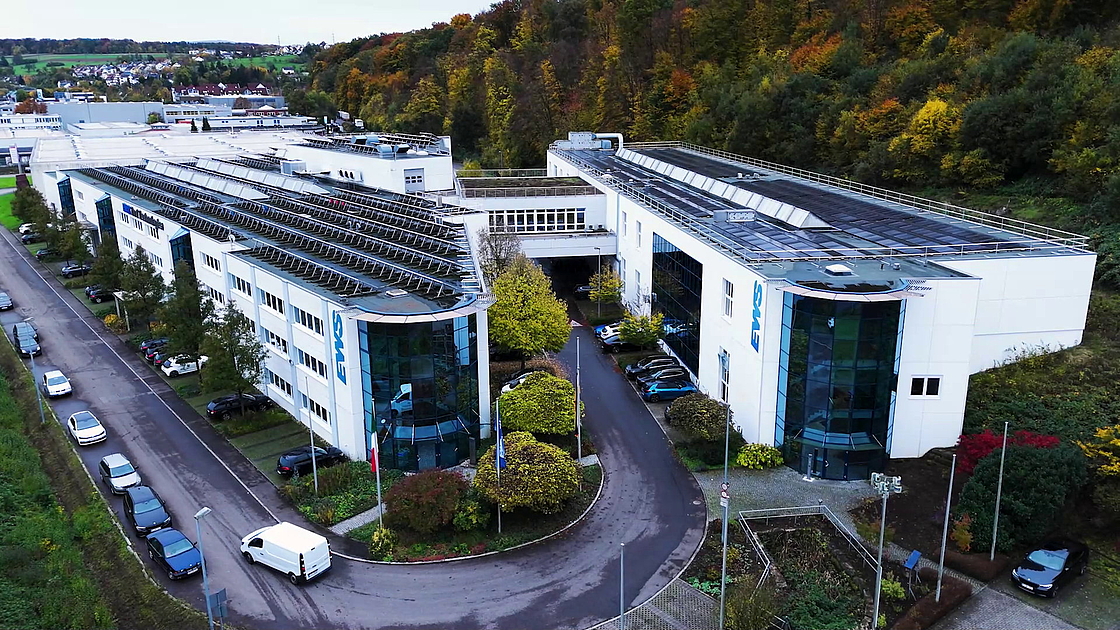
EWS Weigele GmbH & Co KG, based in Uhingen, Germany, develops and manufactures high-precision tool holder systems for CNC machine tools. With an in-house production depth of up to 95 percent, EWS manufactures all components in-house, from the raw material to the assembled precision tool holder. The company consistently relies on digitalized manufacturing processes and modular quick-change systems to achieve maximum flexibility with small batches.
Contact

Oliver Hagenlocher
Area
Press and Communication