Precision and Cost-effective Manufacturing of Transmission Components and Powertrain Parts
Gears, bevel gears, gear shafts, planetary gears – the powertrain places the highest demands on precision and efficiency. EMAG offers machines, technologies, and automation solutions tailored to every gear component, all from a single source.

Complete process chains for gear components - from soft to hard machining
Gears, bevel gears, and planetary gears: turning, milling, and grinding in a single line
Whether gears, bevel gears, or planetary gears - gear components must be manufactured in large quantities with tight tolerances. EMAG combines lathes from the VL platform with gear hobbing and grinding machines to form compact production lines. This allows all operations - from turning the blank to gear hobbing and hard finishing - to be integrated into a continuous material flow. This reduces lead times and minimizes changeover effort.
For the hard machining of sprockets and CVT pulleys, EMAG relies on the combination of hard turning and grinding in a single setup - for example, on the VL 100 GT or VL 200 GT. This eliminates reclamping errors, reduces tooling costs, and significantly shortens cycle times. For users, this means: fewer machines, less floor space, and higher productivity per square meter.
Gear shafts: Joining and laser welding for maximum functional density
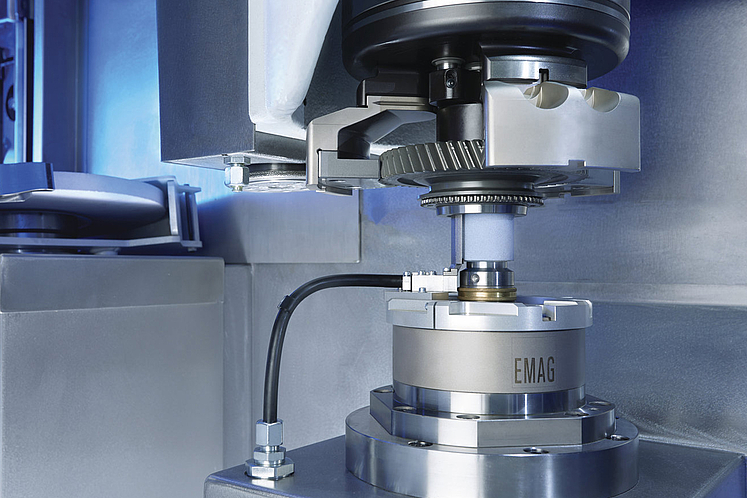
Assembled gear shafts enable high functional density with compact dimensions. Thermal joining allows gears to be positioned directly up to the shoulders - enabling flexible implementation of various gear shaft variants. At the same time, the use of hollow shafts reduces rotating masses without compromising load-bearing capacity.
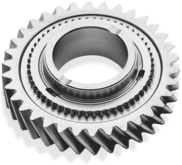
Laser welding is used for welded gear shaft assemblies such as the gear with a synchronizer ring. The solid-state laser provides precision control over the energy input, minimizes distortion, and achieves consistently high weld quality - while consuming less energy than CO₂ lasers. An integrated ultrasonic inspection ensures component quality after each processing step.
Steering pinions and worms: Cost-effective manufacturing of EPS system components
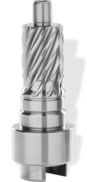
Electric power steering (EPS) systems are manufactured in the automotive industry in the millions. EMAG offers specialized solutions for steering pinions and worms: The K 160 gear hobbing machine is designed for machining various steering pinion variants and combines pre-milling and skiving in a single system. The integrated gantry loader ensures fully automatic operation.
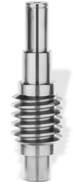
For worms and worm shafts, EMAG relies on the HLC 150 H horizontal gear hobbing and worm milling machine. Its virtual Y-axis gives the machine exceptional rigidity and, after hardening, enables a hobbing quality that was previously only achievable through grinding. Complete process chains from soft to hard machining are available from a single source.
Advantages
- Complete process chains from a single source: EMAG covers all manufacturing steps for gear components - from turning, gear hobbing, and grinding to laser welding and joining.
- Machining in a single setup: Whenever possible, multiple operations are performed without re-clamping - this eliminates reclamping errors and improves dimensional accuracy.
- Integrated automation: pick-up spindles, TrackMotion, robot cells, and conveyor automation reduce non-productive time and ensure stable, labor-efficient production operations.
- Compact manufacturing systems: The machines of the VL platform require minimal floor space - even complete production lines for the powertrain can be implemented in a space-saving manner.
- Cost-effectiveness through process combination: Hard turning and grinding in a single machine (e.g., VL 100 GT, VL 200 GT) reduces tooling costs and cycle times compared to separate processes.
- Flexibility for varying production volumes: Modular manufacturing concepts can be expanded at any time and adapted to new component geometries or batches in the powertrain.
Questions and Answers
- What are the basic requirements for machines and processes in transmission manufacturing?
- What are the typical manufacturing steps for gears and planetary gears in the drivetrain?
- Which EMAG technologies are particularly suitable for the hard machining of transmission components?
- How can transmission shafts be manufactured in a cost-effective and weight-optimized manner?
- What are the typical quality and tolerance requirements for transmission components?
- In which industries are powertrain components from this category used?
- How can unit production costs and lead times in transmission manufacturing be sustainably reduced?
Transmission components must be manufactured in large quantities with tight dimensional and geometric tolerances as well as high-quality surfaces.
In gear manufacturing, demands are constantly increasing: Modern gearboxes are becoming more compact, have more gear stages, and thus more gear components. This requires machines that are designed with precision, have stable cycle times, and are flexible enough to handle different component geometries - from gears and bevel gears to shafts. At the same time, there is a need for automated process chains that reduce labor costs and shorten lead times.
The process chain traditionally consists of four steps: turning the blank, rough-machining the tooth profiles, hardening, and hard finishing.
In the first step, the gear blanks are machined on vertical lathes. This is followed by gear hobbing. After case hardening, fine finishing takes place: depending on the quality requirements, either by skiving (up to DIN 6) or by gear generating grinding for maximum smoothness, as is particularly required in electric mobility.
The combination of hard turning and grinding in a single setup offers the greatest potential for cost savings in hard machining.
The VL 100 GT is ideal for sprockets and similar chucked components up to 100 mm in diameter: It combines CBN internal grinding and hard turning in a single work area. The VL 200 GT handles CVT pulleys and uses an additional external grinding spindle to finish all surfaces in a single setup. This saves setup time, reduces grinding wheel wear, and lowers unit production costs.
Assembled gear shafts made from hollow shafts and joined gears offer the best combination of compactness, lightweight construction, and load-bearing capacity.
During thermal joining on EMAG joining machines, the individual components are assembled with high precision. Gears, for example, can be positioned directly up to the shoulders, thereby reducing the required installation space. A wide range of laser machines is available for laser welding of gear shaft assemblies, such as gears and synchronizer rings. Solid-state lasers, integrated ultrasonic testing, and automated loading ensure short cycle times and consistently high quality in series production.
Depending on the component and application, gear tooth quality grades ranging from DIN 7 to DIN 5 are required - and even higher for EV drivetrains.
Steering pinions are manufactured to DIN 7-8 (soft milling) and DIN 7 (skiving). Planetary gears for automatic transmissions achieve DIN 6 with skiving; for electric mobility applications with higher smoothness requirements, gear generating grinding to DIN 5 or better is used.
The main customers are the automotive industry, the commercial vehicle sector, agricultural machinery, and, increasingly, the electric mobility sector.
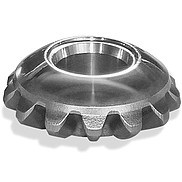
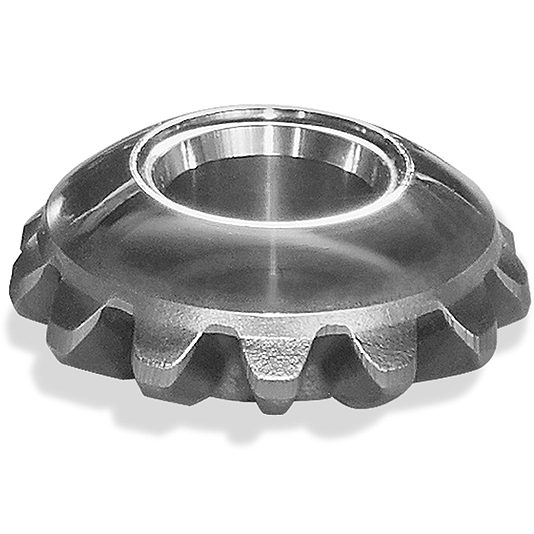
Bevel gears and compensating bevel gears are mass-produced components in passenger car differentials; planetary gears are used in automatic transmissions, transfer cases, and all-wheel-drive systems. CVT pulleys are increasingly being installed in hybrid powertrains. Steering pinions and worms are standard in electromechanical power steering systems. Long drive shafts are found in trucks, agricultural equipment, and military vehicles - a broad spectrum that EMAG covers with a unified modular machine system.
The most effective levers are: machining in a single setup, integrated automation, and the combination of multiple processes on a single machine.
Workpieces
Bevel gear
The VL 1 TWIN from EMAG is the perfect solution for the turning and drilling of bevel gears. This vertical turning center has two pick-up spindles that allow for the parallel machining of two bevel…
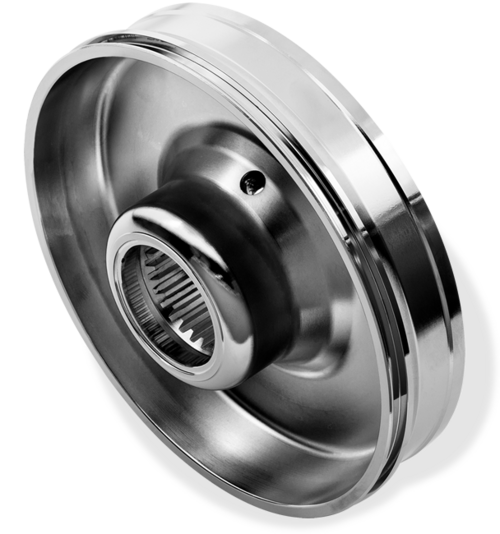
CVT Pulley
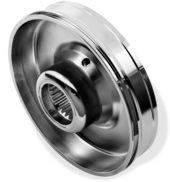
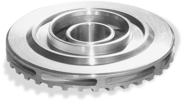
By combining hard turning and grinding methods, CVT pulleys can be machined in a single clamping operation with the VLC 200 GT.
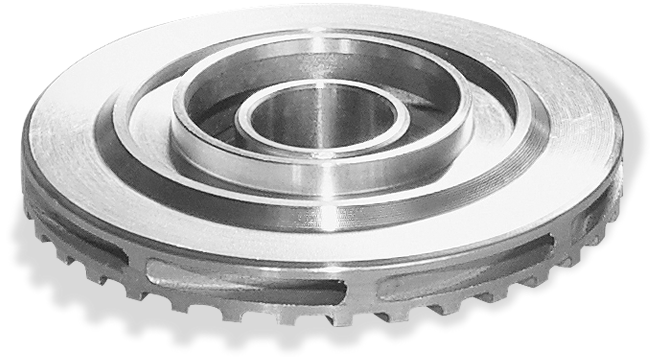
Differential pinion
Precision manufacturing of differential pinions places high demands on CNC turning centers and the automation of the manufacturing system. The differential pinion is manufactured in two separate…
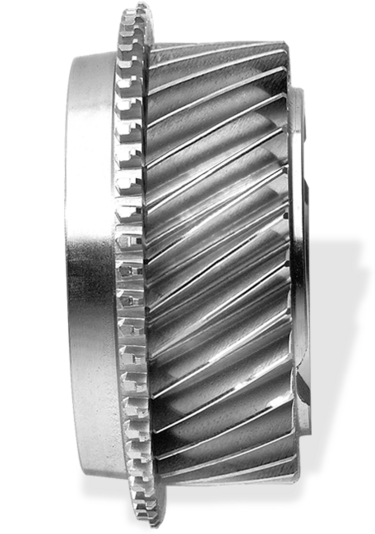
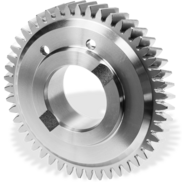
Gear
Machining from raw blank to finished gear– a process that used to take several departments within a shop using multiple experienced operators. Now this process can be done with a pair of digitally…
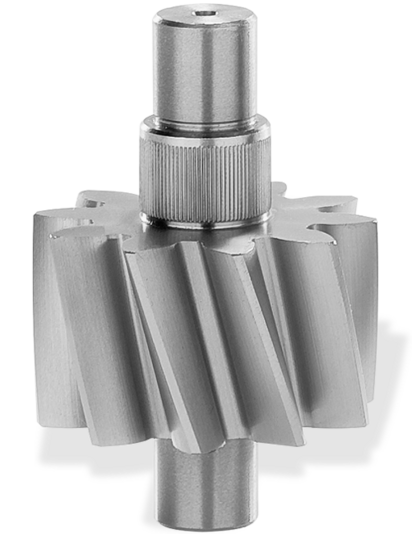
Gear shaft
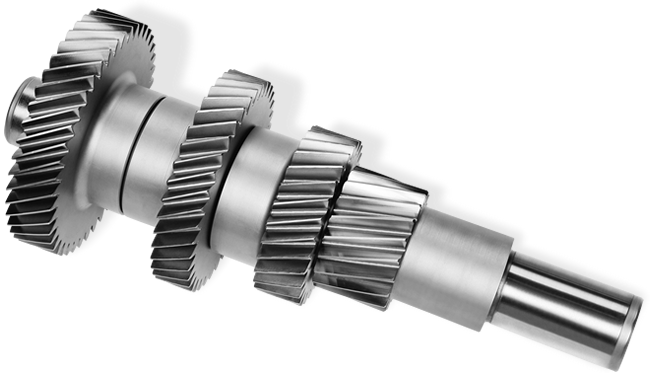
Gear shaft (joining)
Powertrain production calls for flexibility and effectiveness: Different gear shafts with complex geometries need to be produced efficiently in varying batch sizes.
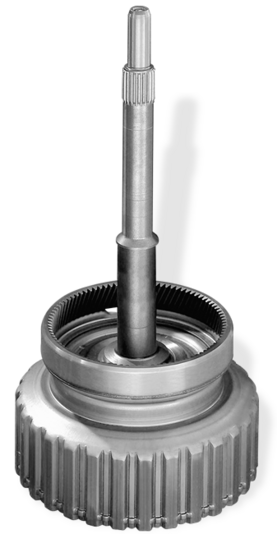
Gear shaft (laser welding)
Laser welding has emerged as a key technology in the manufacturing of weight-optimized vehicle components. Not only does laser welding ensure maximum component quality, it also contributes to the…
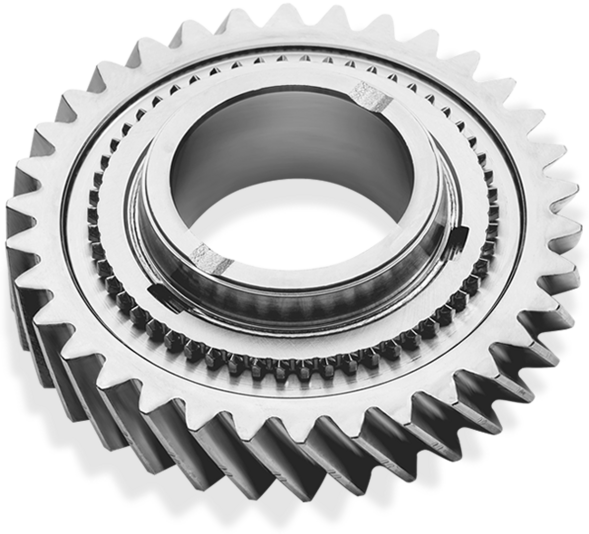
Gear with synchronising wheel
One look at a typical gearwheel shows the machining challenges involved. Even a small wheel with integrated synchronous gear is a relatively complex construction.
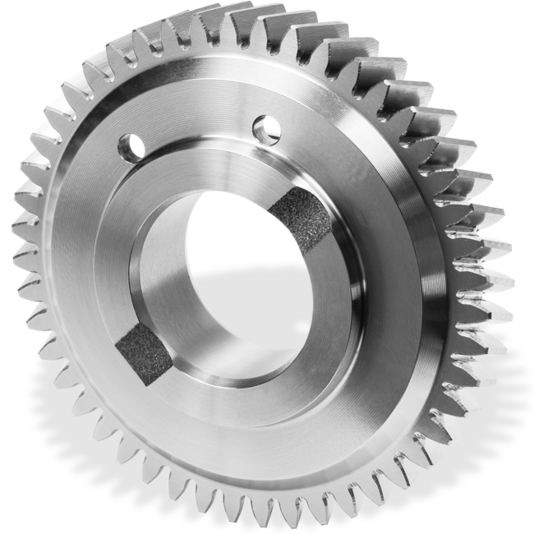
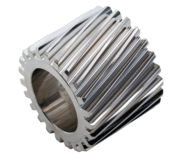
Hobbing gears
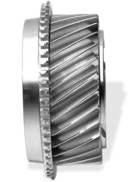
The increasing number of automobile gears, especially as automatic transmissions are developed with 10-gear systems, allow cars to run for longer periods of time within optimal rpm ranges, thus…
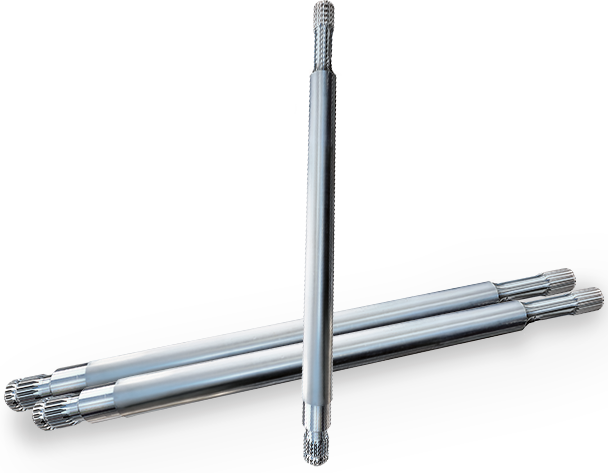
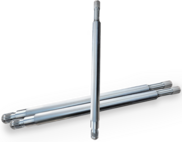
Long drive shafts
Long drive shafts are key components in the drivetrain of wheeled and tracked military vehicles. They transmit high torque over large distances, connecting transmissions, intermediate bearings and…
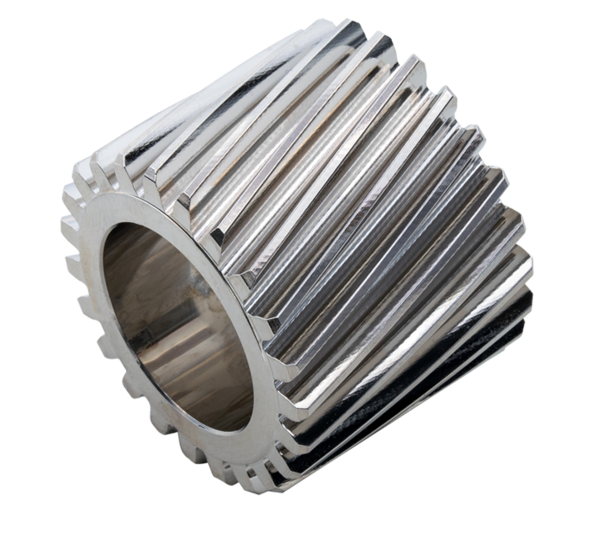
Planetary Gears
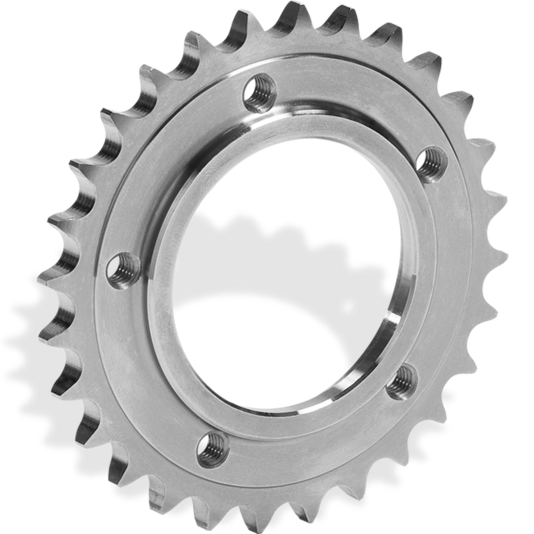
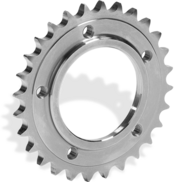
Sprocket
The combination of different processes within a single machine and a single setup offers enormous savings potential in terms of cycle times. With the machining of chucked components up to 100 mm in…
Sprocket (Manufacturing System)
With the vertical pick-up turning centers of VL-Series and a VL 4 H vertical hobbing machine, EMAG offers the ideal manufacturing systems for the complete machining of sprockets. An EMAG TrackMotion…
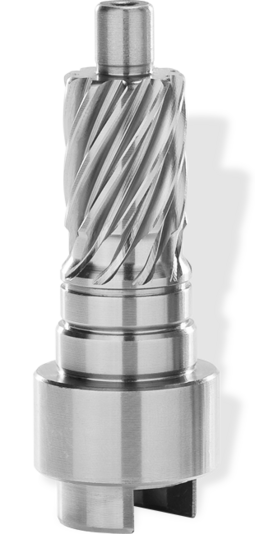
Steering pinion
These days, power steering systems are standard in all cars. It is the reason why the steering pinion that transfers the movement of the steering wheel to the steering system’s gear shaft is produced…
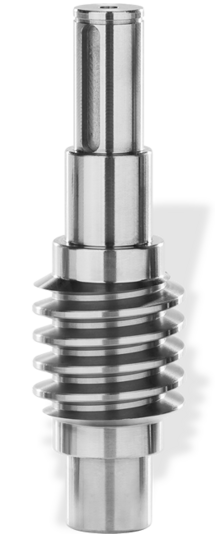
Worm Gear
Today, electromechanical power steering systems, also called electric power steering (EPS) systems, are nearly a standard on many vehicles across the world. How can the corresponding components, such…