EMAG - Responsibility and Resource Efficiency in Mechanical Engineering
The global challenges of climate change and the associated legal requirements for reducing greenhouse gas emissions define the regulatory framework for modern manufacturing companies. The EMAG group fully complies with these legal requirements and firmly integrates environmental protection guidelines into its daily operations. The company is already implementing concrete measures at its locations to track and systematically optimize current energy and resource consumption in manufacturing.

- 1. Measurement of the carbon footprint
- 2. Setting reduction targets
- 3. Implementation of the reductions
- 4. Support for climate protection projects
- 5. Transparent communication
The systematic tracking of our carbon footprint forms the foundation of our well-founded climate protection strategy. This carbon footprint serves as a strategic starting point and reliable benchmark for EMAG to identify reduction potential with precision and to transparently measure progress over time. To guarantee the highest data quality and audit compliance, our emissions are calculated using external, certified software and strictly in accordance with the internationally recognized guidelines of the Greenhouse Gas Protocol (GHG Protocol). The term “CO₂” encompasses not only carbon dioxide but also all other regulated greenhouse gases (such as methane or nitrous oxide). To ensure consistent comparability, these gases are converted into so-called CO₂ equivalents (CO₂e) in accordance with scientific guidelines.
Once the carbon footprint has been recorded, EMAG has set reduction targets that both comply with legal requirements and take into account the company's own ambitions. These targets are specific, measurable, achievable, relevant and time-bound and take into account all scopes (direct and indirect GHG emissions).
Once the reduction targets have been set, the implementation phase follows. This involves concrete measures and projects to reduce emissions. These can involve a wide range of measures, from the optimization of production processes to the introduction of energy efficiency measures and the use of renewable energies. EMAG pursues a holistic approach that aims to reduce emissions in all areas of the value chain.
To further fulfill our environmental responsibility, we provide targeted support for external climate protection projects at the local, national, and global levels. These initiatives make measurable contributions to combating climate change and promote the conservation of natural ecosystems. Focus on Transparency: The emission reductions achieved through these projects are strictly considered an additional contribution to climate protection and are explicitly not offset against our own emissions balance. Through this dual strategy - the consistent reduction of emissions within our own value chain combined with this separate external commitment - EMAG ensures transparency and generates measurable added value for the environment and society.
Transparency is a key principle in EMAG’s climate protection strategy. The company regularly keeps stakeholders informed about progress, challenges, and successes in the ongoing reduction of its greenhouse gas footprint. This open communication promotes awareness and understanding of climate protection measures among employees, customers, partners, and the public.
Legal framework
Various legal requirements form the binding framework for EMAG’s climate protection strategy:
- Global (2015 Paris Agreement): Limiting global warming to well below 2 °C, preferably to 1.5 °C, compared to pre-industrial levels.
- Europe (EU Green Deal): Reducing greenhouse gas emissions by at least 55% by 2030 (compared to 1990) and achieving full climate neutrality by 2050.
- Germany (Federal Climate Protection Act): Target of greenhouse gas neutrality by 2045. The statutory interim steps call for a 65% reduction in CO₂ by 2030 and an 88% reduction by 2040 (in each case compared to 1990 levels).
- Baden-Württemberg (Climate Protection and Climate Change Adaptation Act): The state aims to achieve net greenhouse gas neutrality as early as 2040. The state-specific reduction target for 2030 is a 65% reduction compared to the base year of 1990.
EMAG is determined to continue on this path and firmly anchors climate protection in its corporate responsibility. For us, this means consistently embodying resource-efficient thinking and responsible action in our daily processes and decisions, based on legal requirements.
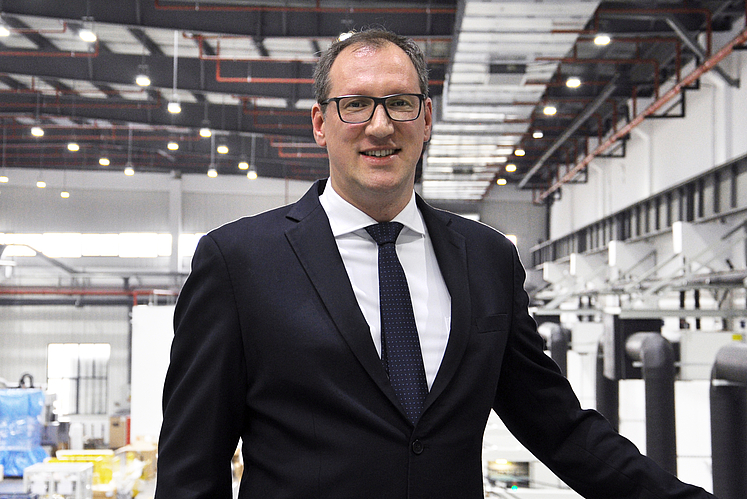
At the EMAG group, we recognize that our responsibility as a globally active company extends far beyond the provision of high-quality machines and services. As part of our role in society, we are committed to the ESG principles (Environmental, Social, and Governance). In this way, we ensure that our company moves into the future in a sustainable, socially responsible, and well-managed manner.
The ESG principles are the cornerstones of our business practices and form the foundation for all our decisions and strategies. They commit us not only to actively addressing environmental concerns but also to acting in a socially just manner and to strong, responsible corporate governance.
Sustainability and climate protection are at the heart of our ESG strategy. For us, these are not abstract concepts, but fundamental guidelines that shape our actions. They influence the way we manufacture our machines, how we interact with our partners and customers, and how we contribute to society.
At EMAG, we are convinced that sustainable practices not only protect our environment but also strengthen our company. Sustainable processes are more efficient, reduce our dependence on finite resources, and improve our risk management.
We recognize that CO₂ reduction will become a decisive economic factor in the future. In this context, we place great importance on continuously reducing our own emissions and making our processes more energy-efficient. Our goal is to develop technologies that are not only powerful and reliable but also meet our customers’ evolving requirements in the area of climate protection. In this way, we aim to help companies implement their own forward-looking production strategies.
We are proud of what we at EMAG have already achieved in terms of ESG. But we also know that there is always room for improvement. That is why we will continue to work in the future to further intensify our sustainability and climate protection measures and find new ways to make a positive contribution.
Markus Clement, CEO EMAG Group