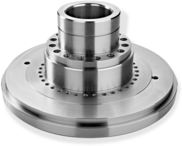
Housings and Flanges - Precision Machining for the most demanding Requirements
Whether flanges, differential housings, or azimuth drives - EMAG offers customized manufacturing solutions for complex housings and rotary components. Short cycle times, high quality, and integrated automation are at the heart of these solutions.

Housing Machining and Flange Production: Economically Producing Complex Components
Flanges and housings: Precision in batch production
Flanges and housings are often extremely demanding workpieces. Whether in automotive powertrains, wind turbines, or hydraulic systems: The requirements for dimensional accuracy and surface finish are high. EMAG develops complete production lines for these components that combine turning, milling, drilling, and grinding processes under one roof.
Differential housings and components for azimuth drives: Focus on complete machining
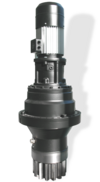
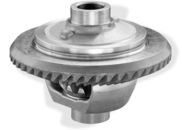
At EMAG, differential housings are machined in three to four operations on vertical pick-up turning machines. The TrackMotion automation system connects the machines into a compact line. EMAG also offers manufacturing solutions for azimuth drives in wind turbines, including drive housings, planetary carriers, and hollow gears.
Articulated Cages, Pump Rings, and Roll Rings: Special Processes for Precision Components
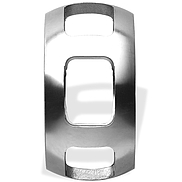
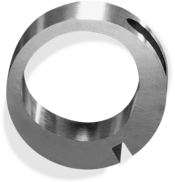
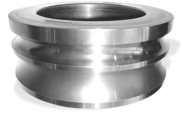
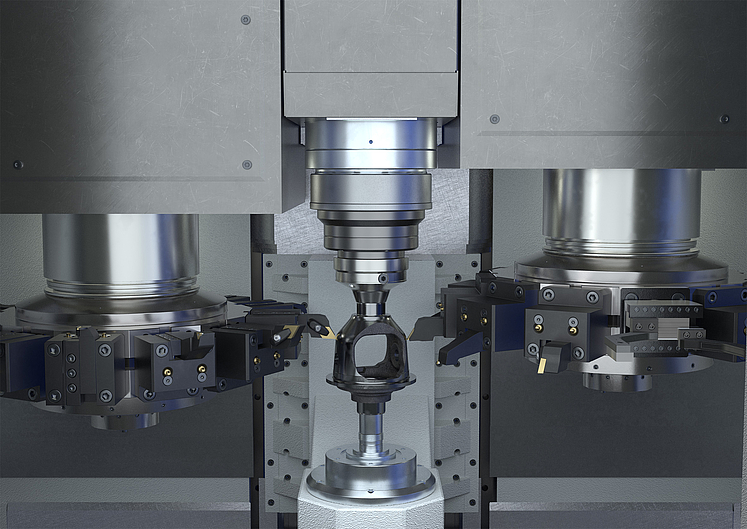
EMAG supplies machines and manufacturing systems for the cost-effective machining of complex components. Some examples: Articulated cages are turned and milled in a single setup. This allows multiple machining steps to be combined and cage windows to be machined simultaneously. Pump rings for hydraulic and refrigeration compressors can be efficiently finished by combining out-of-round, cylindrical, and surface grinding. Carbide rolling rings are machined entirely in a single setup. Integrated measurement technology ensures high process reliability and reproducible quality.
Advantages
- Complete-machining in a single line: Turning, milling, drilling, and grinding can be combined on EMAG machines - this significantly reduces setup times and lead times.
- Short cycle times thanks to integrated automation: Whether it’s a pick-up spindle, TrackMotion, or turret loading - the integrated automation systems minimize non-productive time and ensure a continuous production flow.
- High quality through machining in a single setup: Reclamping errors are eliminated. This enables very tight tolerances for housings and flanges.
- Scalable production lines: Thanks to a wide range of automation options, multiple machines from the modular VL series can be flexibly linked-up - tailored to production volume and component variants.
- Integrated measurement technology and quality assurance: Measurement stations are directly integrated into the manufacturing process, e.g., during roll ring machining, and ensure seamless quality control without additional effort.
- Technology and process development from a single source: EMAG supplies machines, automation, and process expertise as a package - this shortens commissioning and ensures rapid production starts.
Questions and Answers
- How does EMAG perform the complete-machining of housings and flanges?
- What special requirements do housings such as the differential housing place on the manufacturing process?
- Which EMAG technologies are suitable for machining flanges and housings?
- What does a typical process chain for flange machining look like?
- Which EMAG machines are particularly suitable for housing machining?
- What tolerances and surface qualities can be achieved in flange and housing machining?
- In which industries are flanges and housings of this type used?
- How can cost-effectiveness be increased in the machining of housings and flanges?
EMAG offers solutions for machining housings and flanges in coordinated operations on link-up machines. The components are fully machined in this process. Each operation performs a defined machining step, such as internal or external turning, drilling, or finish-machining. The machines are connected via automation systems. This results in compact production lines with short cycle times and high repeatability.
Housings such as differential housings are geometrically complex and require precision machining of the internal and external surfaces on multiple planes. Different component variants - e.g., full-sphere or hemispherical housings - require flexible machine concepts. Added to this are high production volumes combined with tight tolerances, making automated processes with integrated measurement technology indispensable. Reclamping errors must be reliably eliminated through suitable clamping concepts.
Depending on the workpiece, EMAG employs turning (soft and hard), milling, drilling, and grinding - even in combination on a single machine. For flanges, the VL series with soft and hard machining in a cell-based line is ideal. For housings with complex internal and external contours, vertical turning machines such as the VL 4, VL 6, and VT 4 are ideal. Precision components such as rolling rings or pump rings benefit from the combination of turning and grinding on the VL GT series.
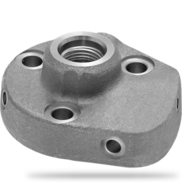
Complete-machining of flanges typically takes place in three setups. In OP 10, the end faces, bevel, and bore are machined; OP 20 handles the internal contour and face turning; OP 30 performs finish-machining on the external contours and end faces. Three VL 2 lathes are linked-up for this purpose via automation systems and a turner.
Depending on the requirements, EMAG uses different machine types for housing machining. The VL 4 and VL 6 are used for turning and drilling operations on differential housings, while the VT 4 enables 4-axis external machining in a single setup. For large components such as azimuth drives with a diameter of up to 520 mm, EMAG offers specially designed large-scale machines with an integrated tool changer and measuring station.
The achievable tolerances depend on the workpiece and the technology used. Machining in a single setup eliminates reclamping errors, enabling particularly tight positional tolerances. For questions regarding specific tolerance values, EMAG will provide you with advisory service as part of an individual process design.
Flanges and housings are used across a wide range of industries. In automotive manufacturing, the focus is on differential housings and joint cages; in the wind power industry, it is on azimuth drives and pitch gearboxes. Hydraulic and compressor manufacturing requires precision pump rings, while general mechanical engineering utilizes a wide range of flanges and housing components. All these applications share the requirement for high repeatability and cost-effective batch production.
The greatest potential for improvement lies in reducing non-productive times, setup operations, and lead times. EMAG achieves this through integrated automation, short chip-to-chip times, and the use of combined technologies on a single machine. Compared to automated horizontal lathes, the VL series increases productivity by approximately 15 percent. For rolled rings, the VSC DS process has reduced the total machining time from several hours to just a few minutes.
Workpieces
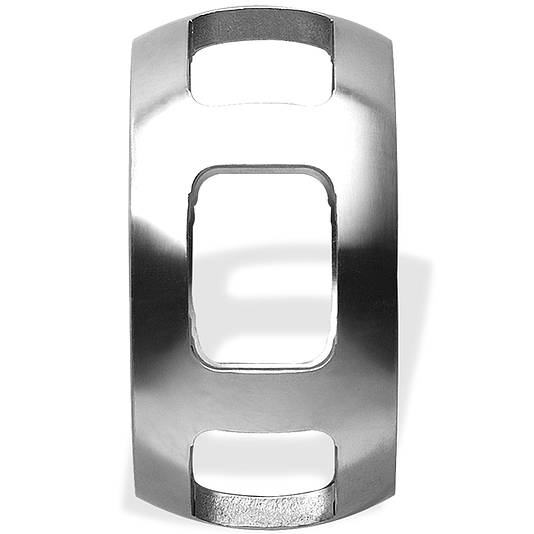
Articulated cage
Articulated cages are completed automatically on the 4-axis turning centers of the VTC series. The external turning and the window-milling of articulated cages are done in one clamping operation. The…
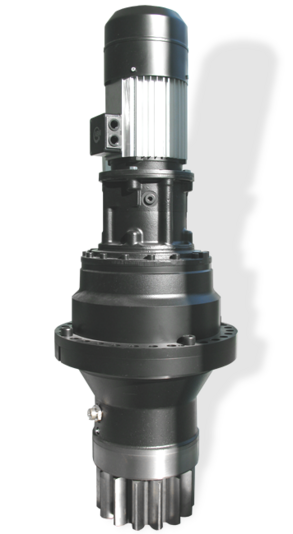
Azimuth drive
The boom in the wind power industry is showing no sign of stopping. All around the world, renewable energies are a popular investment vehicle and wind turbines are playing an increasingly important…
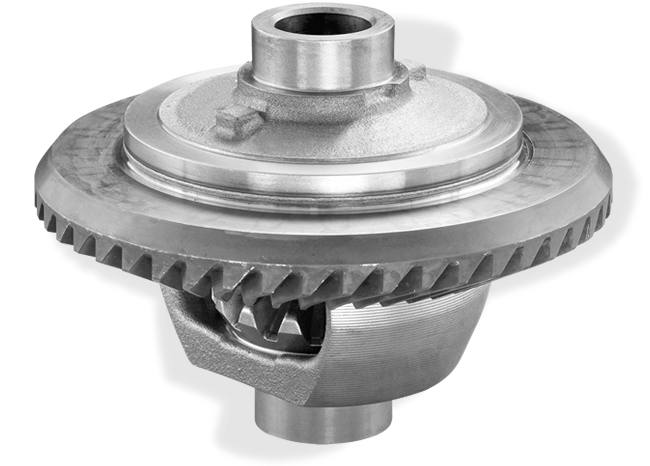
Differential housing
Turning complex differential housings is a growing challenge, as production volumes are rising—the component will also remain indispensable into the future, for all propulsion systems. EMAG develops…
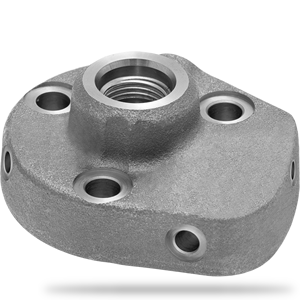
Distributor flange
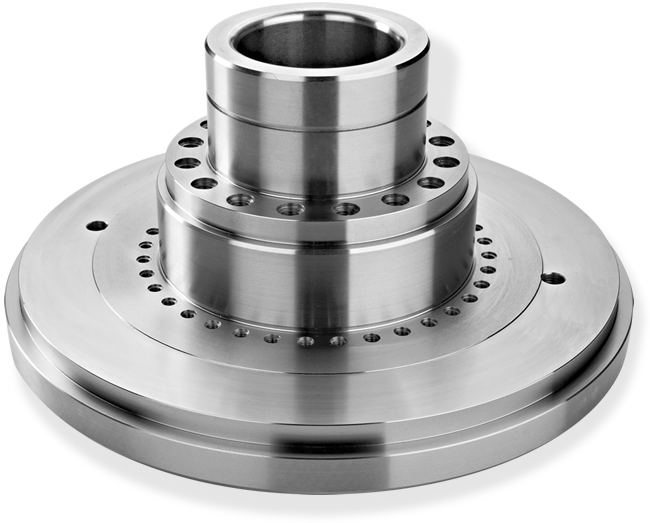
Flange
“Downsizing” remains the focus of industrial production, in regards to car engines, in the energy industry or also general mechanical engineering. Ever smaller and more precise components are being…
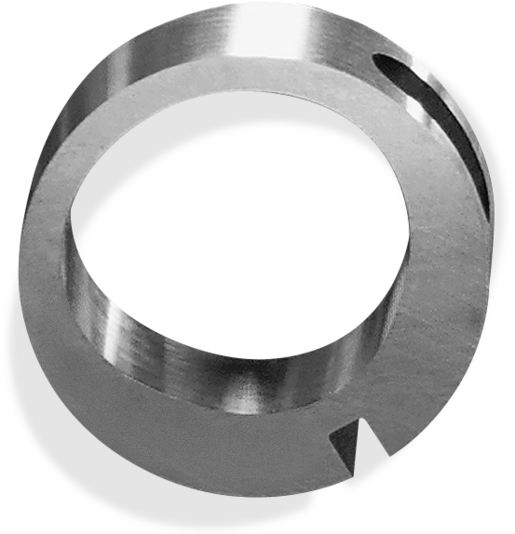
Pump ring
Whether round or out-of-round workpieces or even free-form surfaces, with the SK 204 both internal and external pump ring machining is possible: Out-of-round grinding, cylindrical grinding (internal…
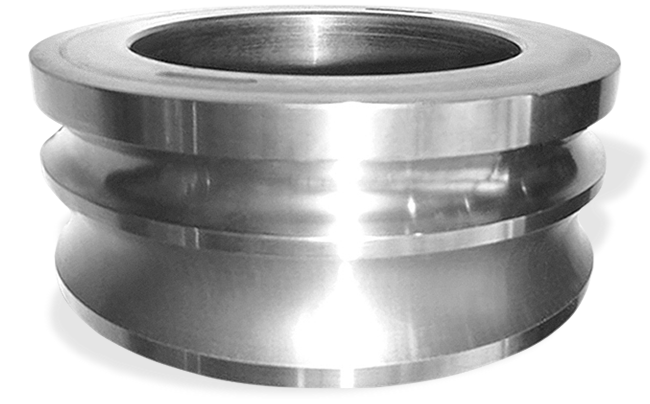
Roll ring
Roll rings are precision components that significantly influence quality during wire manufacturing. EMAG has developed a system for processing top quality roll rings extremely quickly.
Roll rings are…