Energy management with the EMAG Energy Monitor
Energy savings and emissions reduction are crucial factors for resource-efficient and sustainable production. Transparency plays an important role in this context. With the Energy Monitor, EMAG introduces a tool that provides a transparent and traceable overview of machine energy consumption and emissions.

The Energy Monitor: Transparency for electricity and compressed air
Electricity and compressed air are present in every machine and are therefore key factors when it comes to the energy efficiency of manufacturing processes. EMAG’s Energy Monitor measures and logs the consumption of these two media. It works similarly to an electricity meter but offers additional advantages thanks to its direct integration into the machine.
The Energy Monitor can be used to determine key metrics, such as energy consumption per shift, per workpiece, or during non-productive periods. The visualization and transparency of this data enable users to identify opportunities for improvement and implement appropriate measures. The Energy Monitor can also detect anomalies and alert the user if energy consumption is unusually high during the current shift.
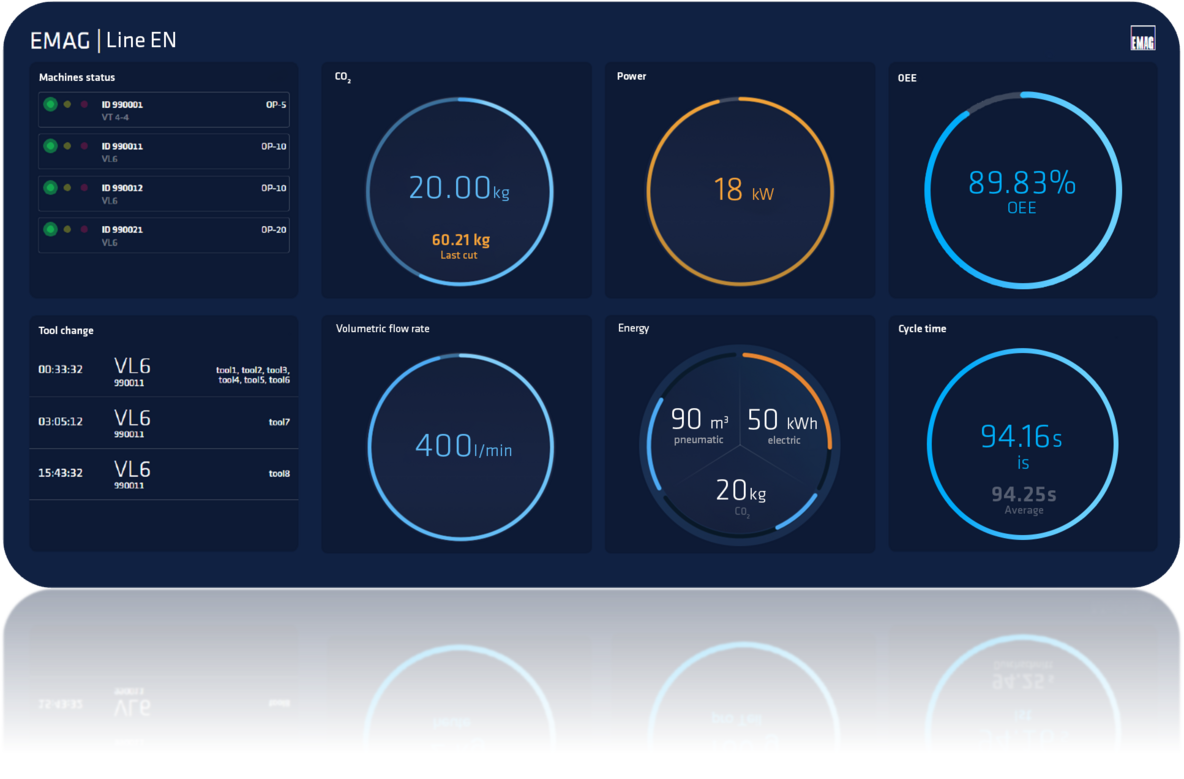
Integration and use of energy data for condition monitoring
The Energy Monitor is fully integrated into EMAG’s IT solutions. The data is available either directly at the machine, centrally in production, or at the workstation. Future plans include using the energy data for condition monitoring. This would make it possible to detect increasing leaks in compressed air or in a clamping cylinder at an early stage and notify the operator.
Conserving resources through transparency
With the new Energy Monitor, EMAG provides transparency regarding the machines’ electricity and compressed air consumption. It measures total power consumption and air consumption to identify unproductive conditions and specifically save energy and compressed air where they are not needed. It calculates various key metrics, such as total, daily, and workpiece-specific energy and compressed air consumption, as well as CO₂ emissions (based on stored emission factors, e.g., for the electricity mix).
This transparency helps conserve resources and avoid unnecessary costs. It supports companies in becoming more efficient while measurably reducing energy consumption per workpiece.