Brakes, Clutch & Chassis – Efficient Manufacturing of Safety-Critical Components
Outer races, brake discs, brake drums, and wheel hubs place the highest demands on precision and cycle time. EMAG supplies coordinated manufacturing systems for clutch and chassis components - from single machines to fully automated lines.

Complete Process Chains for Clutch, Brake, and Chassis Components from a Single Source
High demands – tailor-made solutions
Safety-critical chassis components such as outer races, brake discs, brake drums, and wheel hubs require tight tolerances, consistent quality, and short cycle times. EMAG designs complete manufacturing systems specifically tailored to these requirements. The focus is not just on the machine itself: machining technology, NC programming, tools, automation, and chip management are optimized as a complete system. The result is firm commitments regarding cycle time and component quality - while maintaining the highest possible degree of automation.
From brake discs to CV joints
The range of workpieces extends from passenger car brake discs to components of CV joints, such as outer races and inner races, which are typically produced in large quantities. EMAG offers the right machine technologies for every requirement - whether soft turning, hard milling of ball raceways, or multi-stage production lines for brake drums. These include turning-milling centers, lathes, and the corresponding automation solutions.
Advantages
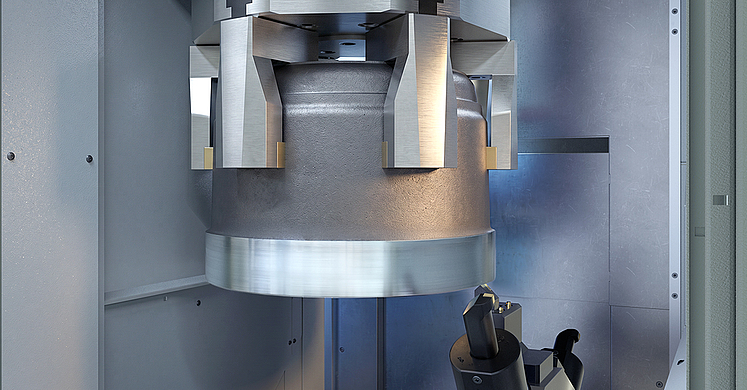
- Compact production lines thanks to vertical pick-up design: The VL series’ small footprint allows for tight machine spacing and easy integration into existing production environments.
- Complete process chains from a single source: From raw part feeding through turning, milling, and drilling to balancing, EMAG supplies coordinated systems - including automation, chucks, and tools.
- Combined machining in a single setup: Soft and hard machining, turning, and milling on a single machine reduce setup errors and significantly improve part quality.
- IoT-ready and Industry 4.0-compatible: All machines in the VL series are delivered with a pre-installed industrial PC. The EDNA platform provides transparency throughout the entire process and enables predictive servicing.
- Scalable production capacity: Compact manufacturing cells can be easily duplicated depending on output volume - without fundamental adjustments to the system structure.
Questions and Answers
- How does the vertical pick-up principle work in the machining of clutch and chassis components?
- What specific manufacturing requirements do brake and clutch components have?
- What machining processes does EMAG use for chassis components?
- Which EMAG machine types are suitable for machining brake and clutch components?
- What tolerances and surface qualities can be achieved when machining outer races?
- How can unit production costs be reduced in the production of brake and chassis components?
- In which industries and vehicle segments can these manufacturing solutions be used?
The machine picks up the workpiece itself - without a separate handling unit. On vertical pick-up turning machines such as the VL series, the work spindle picks up the component directly from the conveyor belt. This enables very short non-productive times, unobstructed chip removal, and a compact machine design. In link-up production lines for brake discs, brake drums, or wheel hubs, this achieves a high degree of automation with minimal footprint.
Safety-critical components such as brake discs or outer races require the highest dimensional and geometric accuracy as well as reliable, reproducible manufacturing processes. At the same time, there is significant cost pressure in these segments: large quantities must be produced with short cycle times and minimal setup times. Ball raceways on outer races, require tight tolerances and defined surface qualities - both in the soft and hardened states.
Depending on the component and requirements, different technologies are used. For brake discs and wheel hubs, turning, drilling, and milling are the primary processes - carried out on lathes or turning/milling machines. Outer races are machined by combining soft and hard turning as well as soft and hard milling of the ball tracks, sometimes in a single setup. Brake drums also undergo a balancing process, which is likewise integrated into the automated line.
For large components such as truck wheel hubs and brake drums, the VL 8 is recommended, featuring a chuck dia. of 500 mm and up to 71.7 kW of drive power. For passenger car brake discs, DUO machines are often used; they enable simultaneous machining and short chip-to-chip times for large batches. Outer race journals are manufactured on the VSC series using combination machining of turning and milling. For smaller quantities and components with many variants, the VM 9 turning center offers the necessary flexibility.
EMAG manufacturing systems for outer races enable tight tolerances in turning operations as well as excellent ball-track qualities - in both soft and hard milling. The base body of the machines used is made of Mineralit (polymer concrete), which ensures low-vibration machining. This directly contributes to long tool life and consistently high component quality.
Cost savings arise on multiple levels: Combined machining in a single setup reduces clamping errors and eliminates setup times between operations. Compact, replicable manufacturing cells enable demand-driven scaling without expensive investments in new basic concepts. Predictive servicing via the EDNA platform reduces unplanned downtime. And firm commitments regarding takt and cycle times at project handover provide planning certainty for your production budgeting.
EMAG’s manufacturing solutions for brakes, clutches, and chassis address both the passenger car sector and the commercial vehicle sector. With scalable production lines and flexible machine concepts, EMAG covers the entire spectrum of modern vehicle production—including the growing demands of electromobility.
Workpieces
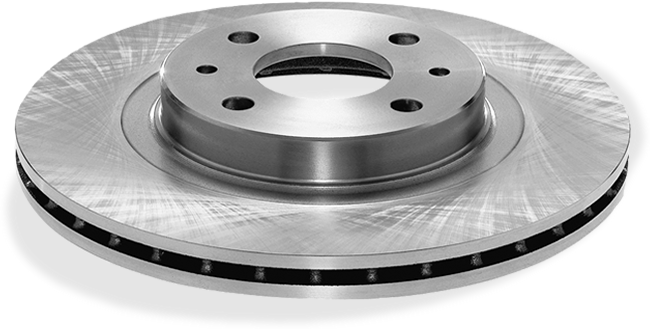
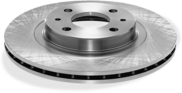
Brake disc
The demand for high volumes and fast cycle times not only applies to brake disc production, but also to EMAG machines. As a specialist in the vertical machining of brake discs, EMAG has worked closely…
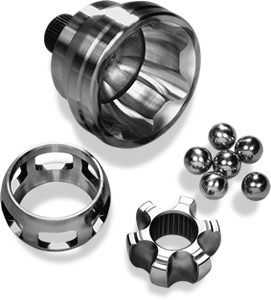
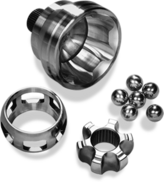
CV Joints
The components of CV joints, such as outer race, articulated cages and inner races demand a lot out of machine tools. EMAG offers a wide range of manufacturing solutions for efficient production.
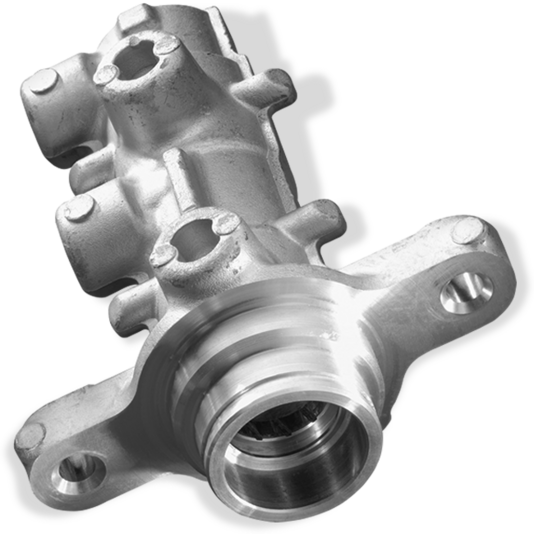
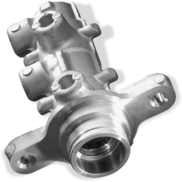
Master brake cylinder
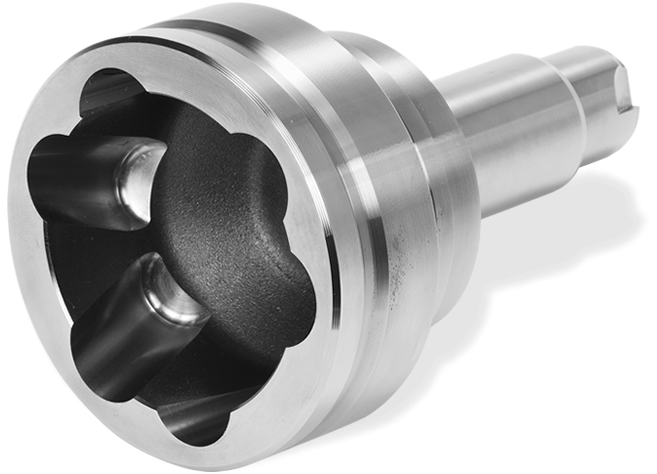
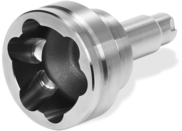
Outer Race
Outer races are difficult to machine with a traditional machining process. EMAG turning centers and ball track milling machines are customized to the specific processing task required to produce outer…
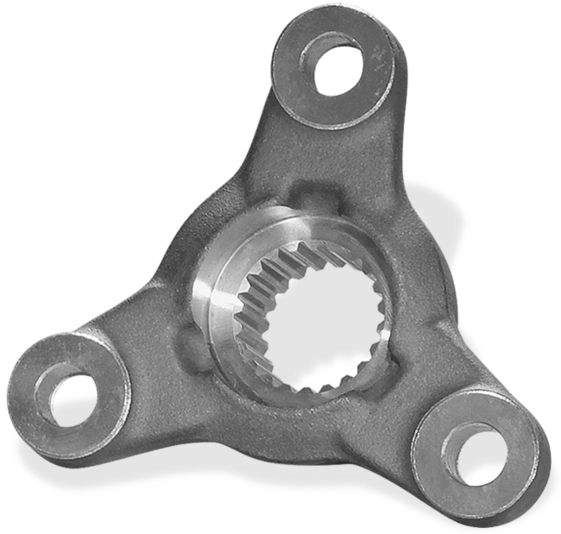
Triple-sector clutch
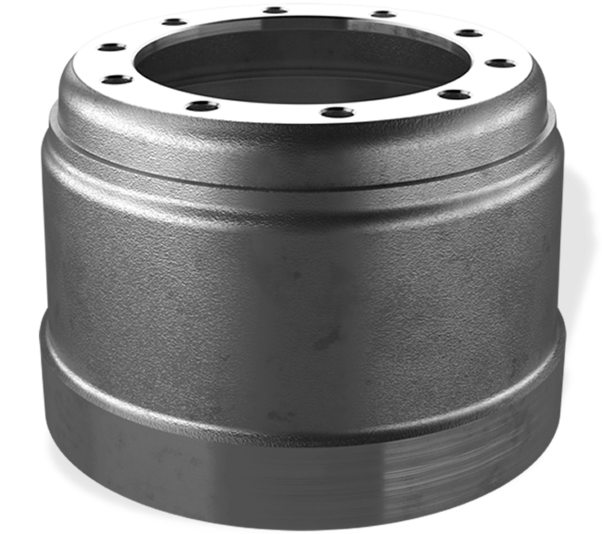
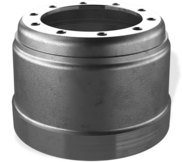
Truck Brake Drum
EMAG is known for its compact manufacturing solutions. That is due to the high degree of automation and the vertical structure of its pick-up machines. This concept was also applied in the design of…
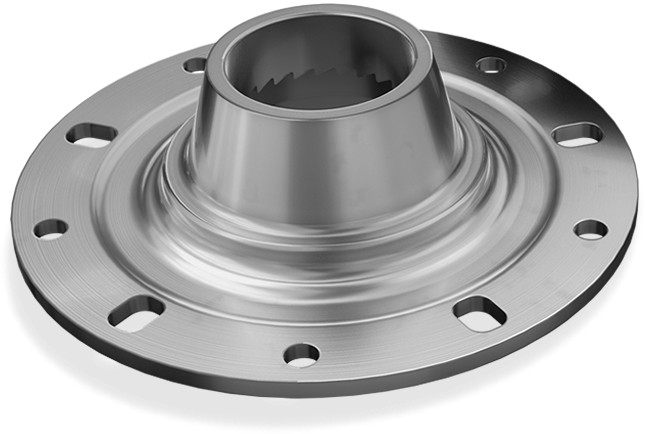
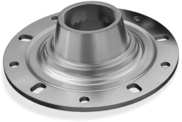
Truck Wheel Hub
The vertical turning centers in the VL series, in particular the VL 6 and VL 8, are ideal for machining larger components, such as truck wheel hubs, thanks to their powerful working spindle and…