Efficient components and energy management in EMAG machines: Measurably reducing energy consumption
Against the backdrop of steadily rising energy prices and increasingly stringent environmental regulations, the topic of energy efficiency is becoming increasingly important in the industrial sector. EMAG recognized this trend early on and focuses on energy-efficient components and intelligent energy management in its machines.

Optimizing energy consumption in EMAG machines
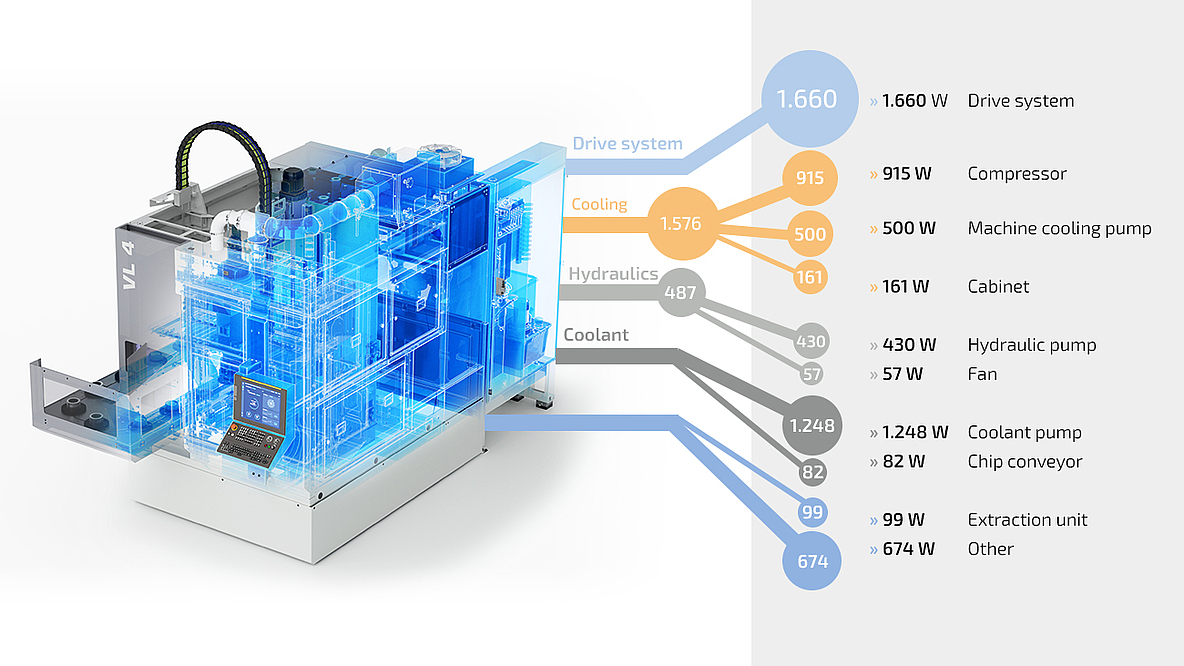
We place special emphasis on optimizing the energy consumption of our machines. That’s why we analyze energy consumption and use energy flow diagrams to determine where and how electrical power is being used. We have determined that a large portion of energy consumption is caused by auxiliary systems such as cooling and hydraulics, and that only 10% of the total energy goes into the direct machining process, while 90% can be considered “unproductive.” Nevertheless, this “unproductive” 90% is necessary for the machine’s operation. EMAG sees significant potential for improvement and optimization here without compromising the machine’s performance. An energy flow measurement is therefore the first step in the redesign of existing machines; on this basis, the potential for increasing efficiency is evaluated.
Innovations and continuous development
EMAG machines are continuously refined with regard to their energy consumption. In doing so, EMAG follows a fixed release cycle in which innovations are incorporated into the standard configuration. This is evident, for example, in the areas of hydraulics and cooling units, where the latest models are used whenever possible to further improve energy efficiency. Two examples with measured values: The cooling unit with Variable Refrigerant Flow (VRF) reduces the cooling system’s electrical power consumption during machining by 48% (measured on a unit with 7 kW cooling capacity, comparing with and without VRF). The variable-speed hydraulic unit, which has been used as standard equipment since around 2012, requires 42.1% less energy than a conventional unit during idle operation and 32.9% less during the load cycle (measured on a VSC 250). In addition, lightweight construction is playing an increasingly important role by reducing the mass of moving parts without compromising rigidity or dynamic behavior.

Energy efficiency retrofit
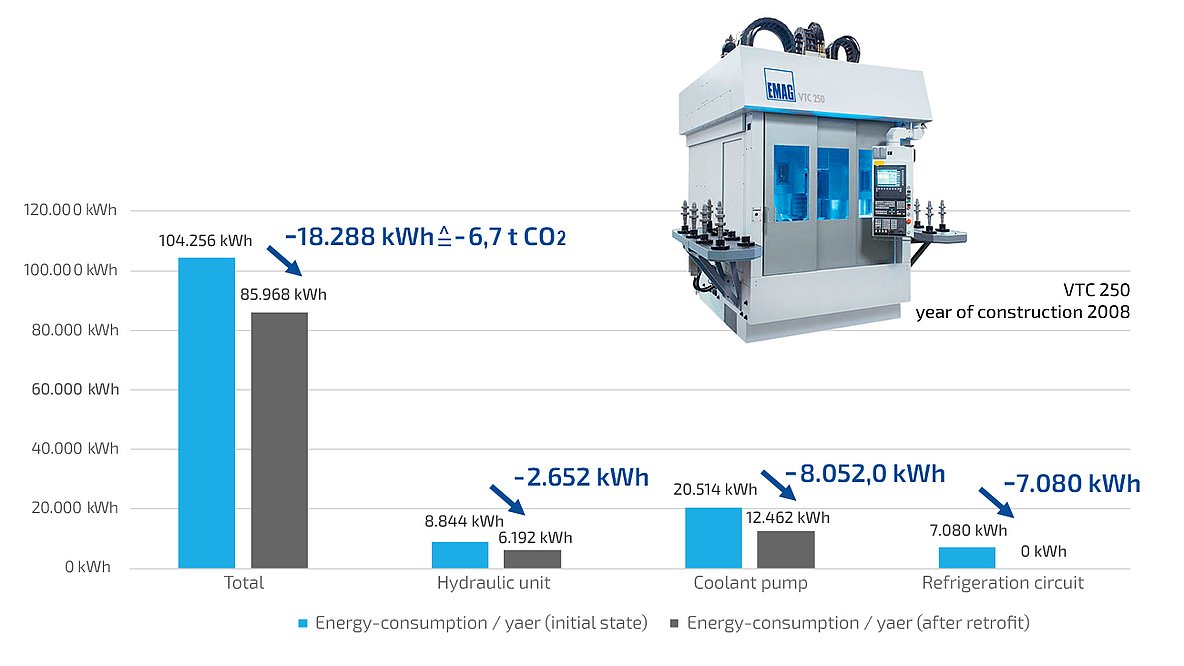
Existing machines also benefit from this. For example, EMAG performed an energy efficiency retrofit on a lathe manufactured in 2008, which resulted in energy savings of over 18,000 kWh per year. This is more than double the annual electricity consumption of an average single-family home. The retrofit took only one and a half days, and the machine was immediately ready for use again. The payback period for such a project is approximately two and a half years with government subsidies and about three and a half years without subsidies - depending on individual electricity rates and the applicable subsidy conditions.
The efficiency factory
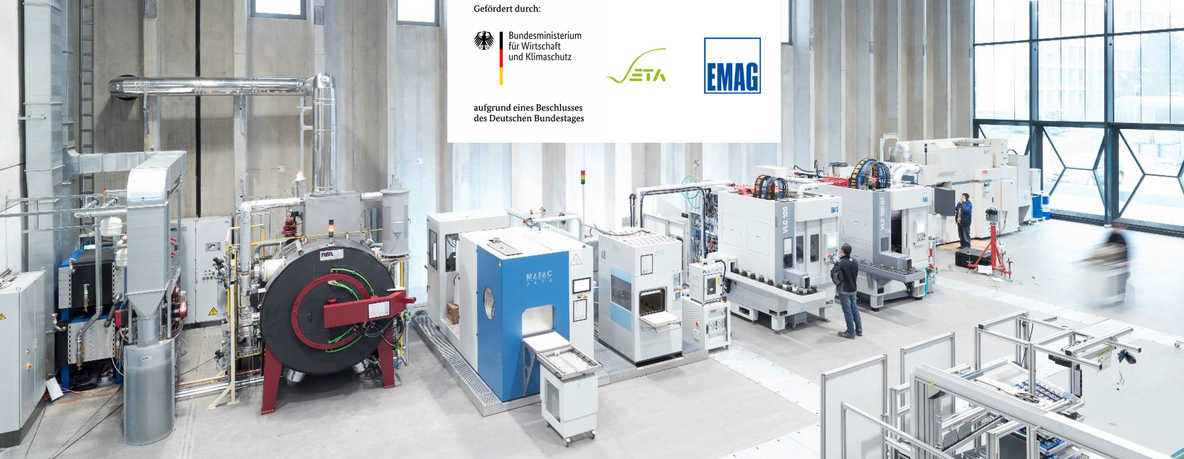
The EMAG Group’s strategic focus is evident in its collaboration with the ETA-Fabrik at the Technical University of Darmstadt. This research project, funded by the Federal Ministry for Economic Affairs and Climate Action, aims not only to improve the efficiency of individual machine components but also to leverage synergies within the production chain.
For example, the waste heat from a lathe can be used to heat a cleaning machine. A current project at the Efficiency Factory focuses on compensating for the idle and cold-start behavior of machines in order to eliminate the need for machines to warm up and remain warm and to compensate for their thermal behavior. This involves collaboration with experts in data and artificial intelligence in manufacturing.
The EMAG Group’s efforts to improve the energy efficiency of machines and further develop components demonstrate how industrial companies can reduce their carbon footprint while simultaneously increasing their profitability. Continuous innovation and collaboration with leading research institutions, such as the ETA-Fabrik at TU Darmstadt, enable EMAG to offer energy-efficient and resource-conserving manufacturing solutions.