Blisks, dies, and other specialty workpieces – Electrochemically manufactured
For workpieces such as blisks and dies, EMAG offers electrochemical manufacturing processes that deliver maximum precision and long tool life, particularly for complex contours and high-strength workpieces.

Electrochemical Machining for High-Performance Components
When Conventional Methods Reach Their Limits
Special workpieces such as a blisk (Blade Integrated Disk) or drop-forging dies place exceptionally high demands on manufacturing technology: extremely hard materials, complex three-dimensional geometries, and tight tolerances. Conventional machining processes are increasingly reaching their economic and technical limits—whether due to high tool wear, thermal effects, or limited design freedom.
PECM and ECM: The EMAG Process Principle
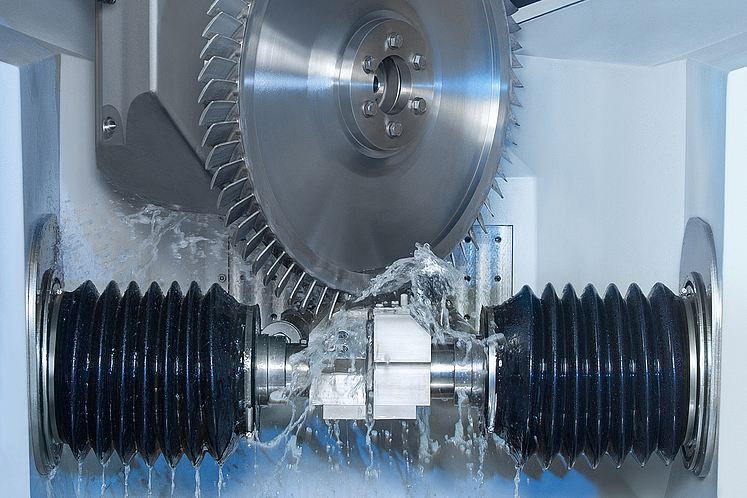
In electrochemical machining (ECM) and precise electo-chemical machining (PECM), the workpiece becomes the positive anode and the tool the negative cathode. An electrolyte solution flows between the two, causing metal ions to detach from the workpiece without contact. Since there is no mechanical contact, there is no tool wear—and thus no rising unit production costs as material hardness increases.
Advantages
- Very low tool wear: The ECM/PECM operating principle is contact-free - tool life is significantly longer compared to conventional machining processes, which keeps unit production costs low in the long term.
- No thermal effects: Neither a heat-affected zone nor microcracks are created in the workpiece - a decisive factor for the stability of high-performance components such as press tools or engine parts.
- Highest precision: Manufacturing tolerances below 20 micrometers are achievable with ECM - even for complex 3D geometries in hardened or difficult-to-machine materials.
- Cost-effectiveness for medium and large production runs: The simultaneous machining of up to 30 components, combined with the elimination of tool changes, significantly reduces total manufacturing costs.
- Maximum design freedom: Contours, annular grooves, notches, and free-form surfaces - ECM and PECM enable geometries that would require considerable additional effort to achieve with conventional methods.
- Specialized machine solutions: EMAG offers the right machine type for every application - from the PO 100 SF for individual blades to the PT series for dies with up to four machining axes.
Questions and Answers
- How does electrochemical machining generally work for special workpieces?
- What special manufacturing requirements do blisks and dies have?
- Which EMAG technologies are suitable for manufacturing these specialized workpieces?
- Which EMAG machines are suitable for blisks and dies?
- What quality and tolerance requirements can be achieved with ECM and PECM?
- In which industries are blisks and dies typically used?
- At what point does the use of ECM or PECM become economically viable?
- Which innovations from the EMAG portfolio support the machining of special workpieces?
ECM and PECM utilize an electrochemical process in which metal ions are removed from the workpiece without physical contact. The workpiece becomes the positive anode, and the tool becomes the negative cathode. An electrolyte solution flows between the two, enabling ion removal. Since there is no mechanical contact, there is neither tool wear nor thermal effects in the material - a decisive advantage over chip removal machining or EDM.
Both workpiece types share a combination of very hard materials and highly complex 3D geometries. Blisks made of nickel super alloys require precision blade contours and annular grooves without material deformation. Dies must produce precise cavities in high-strength steels - and do so in high volumes without any loss of dimensional accuracy. Conventional methods often fail due to economic constraints or quality requirements.
For blisks, EMAG relies on PECM (Precision Electrochemical Machining), which enables particularly gentle machining with the highest surface quality. For dies, ECM is used in the PT series, which, with up to four axes, also handles complex roughing operations. Both technologies operate with virtually no tool wear and without thermal effects on the workpiece.
Two specialized machine types are available for blisk production: The PO 100 SF is designed for machining individual turbine blades, while the larger PO 900 BF handles the complete-machining of entire blisks. For dies, EMAG offers machines from the PT series, which, with up to four axes and feed rates of up to 5 mm/min, also enable large-area and parallel machining.
ECM achieves tolerances of less than 20 micrometers in series production. Importantly, no microcracks or heat-affected zones are created - unlike with EDM. This is particularly relevant for high-performance press tools, where material changes jeopardize component stability. PECM also delivers outstanding surface qualities that, in many cases, eliminate the need for post-processing.
Blisks are key components in aircraft engines and are subject to the strict quality requirements of the aerospace industry. Dies are used wherever components are manufactured through forming, for example in the automotive industry, mechanical engineering, or medical technology. In both areas, precision, material integrity, and process reliability are essential.
For prototypes and very small production runs, electrical discharge machining (EDM) offers advantages due to lower equipment costs. However, as production volumes increase, the situation reverses: The ECM principle, which involves virtually no tool wear, continuously reduces unit production costs, while with EDM, electrode costs and setup times increase proportionally. In addition, the parallel machining of up to 30 components enables a significantly higher output per unit of time.
All EMAG ECM machines benefit from central platform technologies: The Mineralit® machine base ensures high thermal stability and vibration damping. Intelligent software and hardware interfaces enable seamless integration into existing production lines. Efficient automation solutions round out the offering - for a seamless, cost-effective process chain.
Workpieces
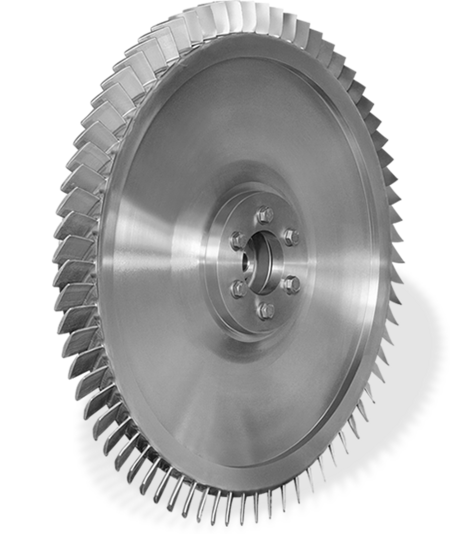
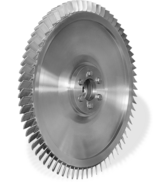
Blisk
Components inside an aircraft engine are exposed to extreme stresses, and therefore made from very hard materials. For example a Blisk (Blade Integrated Disk) is often made from nickel-based super…

Dies
Integrating complex 3D geometry, like that in precision dies of high-tensile materials, places very tough demands on machining technology.
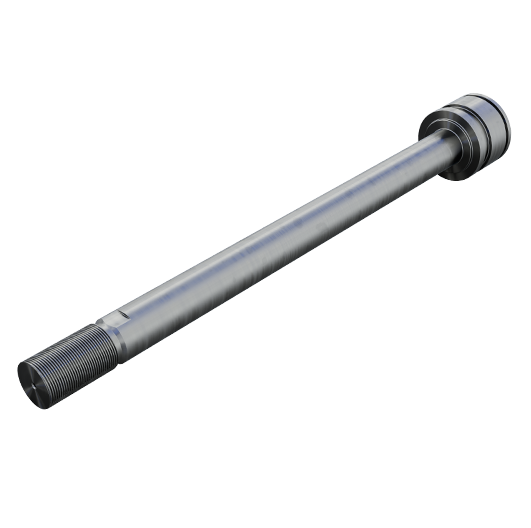
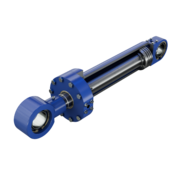
Hydraulic Cylinders and Piston Rods
Piston rods and hydraulic cylinders are exposed to extreme mechanical and corrosive stresses. Conventional surface protection methods are increasingly reaching their regulatory and technical limits.…
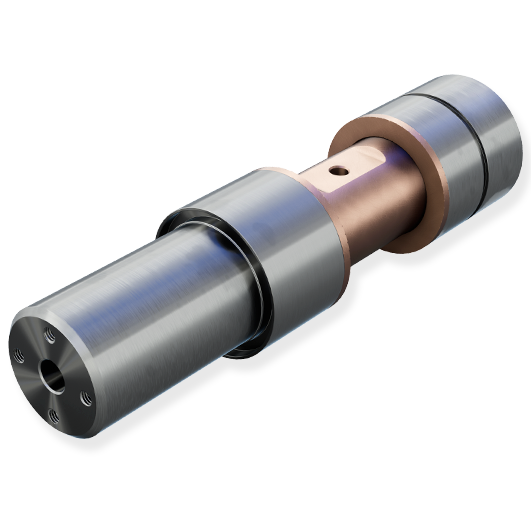
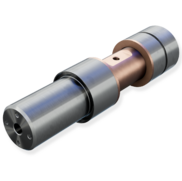
Plain bearings for wind turbines
Laser metal deposition is an innovative process for applying wear-resistant layers to metallic surfaces. In wind turbines, for example, plain bearings are increasingly being used instead of rolling…
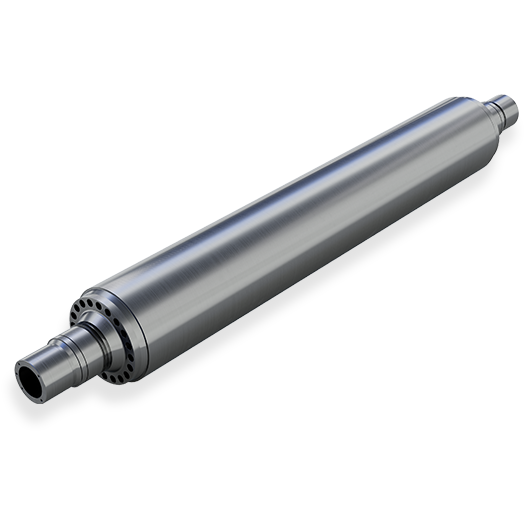
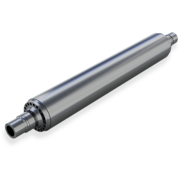
Press and printing rolls
Press rollers in the printing and paper industry operate under constant surface pressure, friction, and chemical exposure. Wear on the roller surface leads to loss of print quality, rising maintenance…