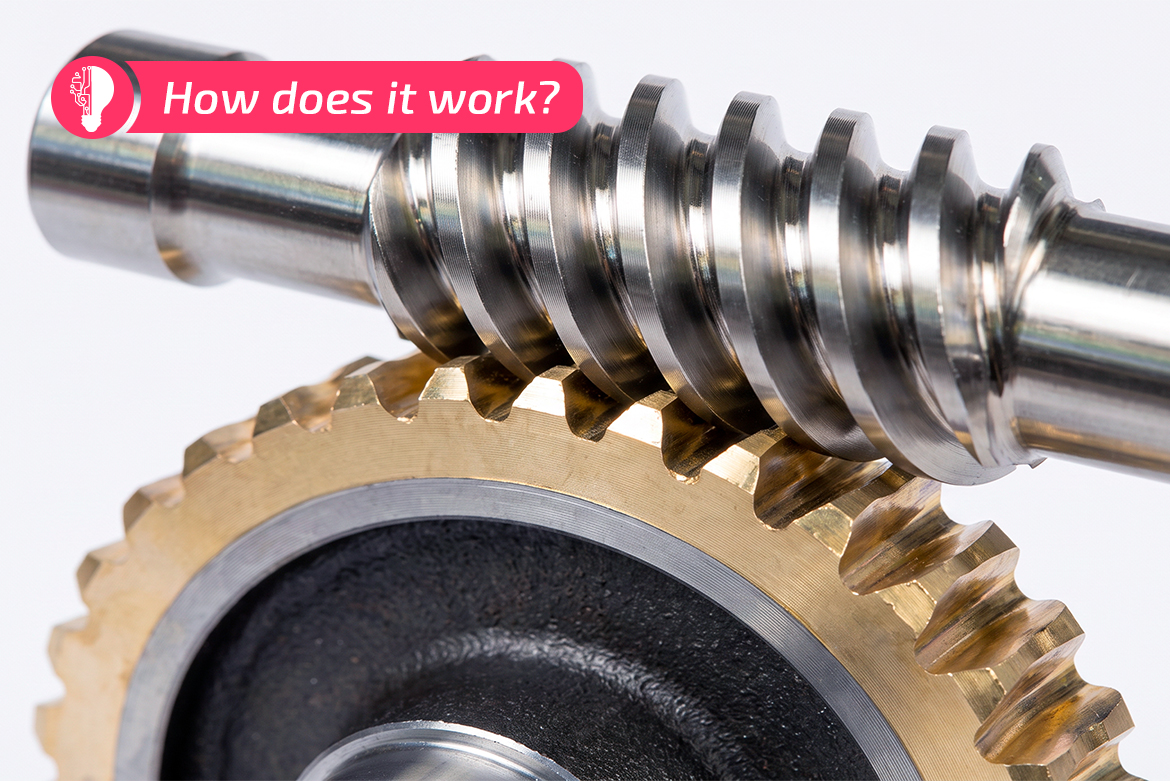
The worm gear is one of the oldest and, at the same time, most widely used gear designs in drive technology. You’ll find it in electromechanical steering systems, elevator drives, windshield wiper motors, or the actuators of a production line, anywhere high gear ratios are needed in tight spaces. But how exactly does a worm gear work, why can it self-lock, and what matters when manufacturing the worm shaft?
1. How does a worm gear system work?
A worm gear system consists of two central components: the worm and the worm gear. The worm is a shaft with one or more teeth wound around it in a helical pattern – similar to a thread. Think of it as a special type of helical gear with a very large spiral angle. The worm gear is the mating gear with teeth precisely matched to the worm’s geometry. The two axes cross without intersecting, typically at 90 degrees.
When the worm turns, its helical threads continuously push the teeth of the worm gear forward – similar to a screw working its way through a nut. For each revolution of the worm, the worm gear moves forward by only as many teeth as the worm has threads. That’s what sets the gear ratio: the number of teeth on the worm gear divided by the number of threads on the worm. A single-start worm driving a 60-tooth worm gear produces a 60:1 reduction in a single gear stage. Typical designs range from about 5:1 to over 70:1, and even higher in special cases.
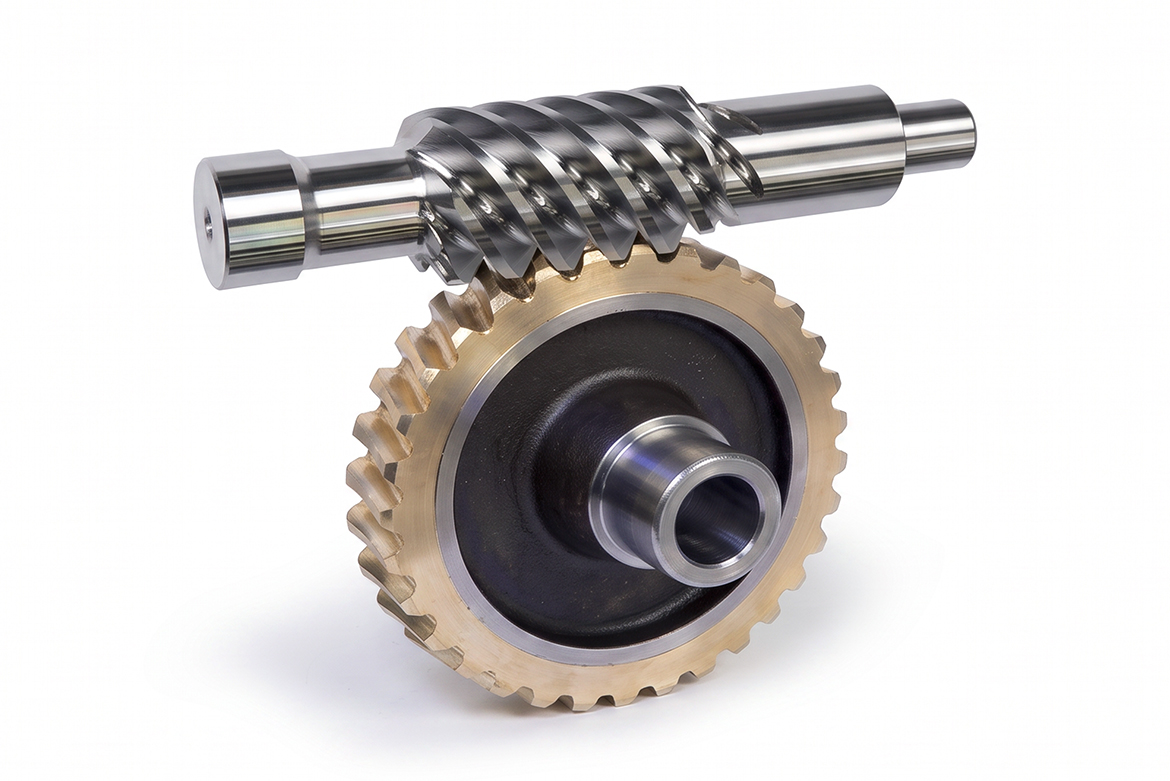
Illustration of a worm and worm gear that illustrates the operating principle: The threads of the worm push the teeth of the worm gear forward.
One feature sets the worm gear drive apart from conventional gear drives: during tooth engagement, sliding far outweighs rolling. The flanks of the worm slide over the teeth of the worm gear. That creates friction, but it’s also what gives this design its notably quiet, low-vibration operation. To manage sliding friction, most designs pair a hardened, ground steel worm with a bronze worm gear, running in lubricant.
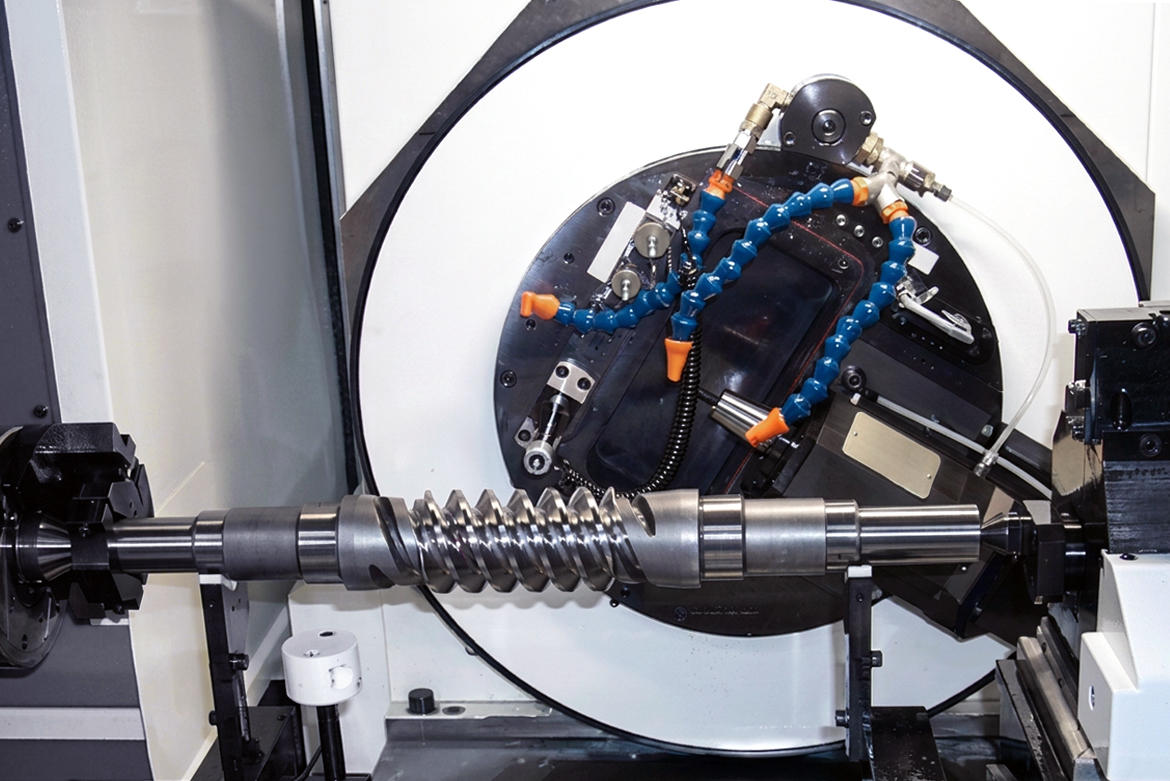
Machining a worm gear for an elevator drive. The self-locking mechanism of the worm gear safely holds the load even when the power is off – a key advantage for use in lifting technology.
2. What is the purpose of this technology?
The primary purpose of the worm gear is to deliver very high reduction ratios to low speeds, in minimal installation space. Where you’d otherwise need multi-stage spur gear sets, a single stage does the job. This saves components, weight, and space. The worm gear also redirects the force flow by 90 degrees, which is exactly what many installations require, for example when an electric motor is mounted perpendicular to the output shaft.
A second function, often relevant to safety, is self-locking: If the worm’s pitch angle is smaller than the friction angle of the material pairing, the gear can only be driven by the worm. Torque applied to the worm gear isn’t enough to set the worm in motion. The gear system then locks automatically, with no additional brake needed. That makes the worm gear the top choice in lifting and conveying technology, stage and elevator applications, and actuators that must reliably maintain their position even when de-energized.
Applications are just as diverse: in the automotive industry, electromechanical power steering systems in passenger cars; in industrial applications, elevator and hoisting technology, packaging and conveying technology, and countless actuators in machinery and plant engineering. Worm gearboxes are durable, especially at moderate motor speeds which makes them a strong alternative to bevel gearboxes.
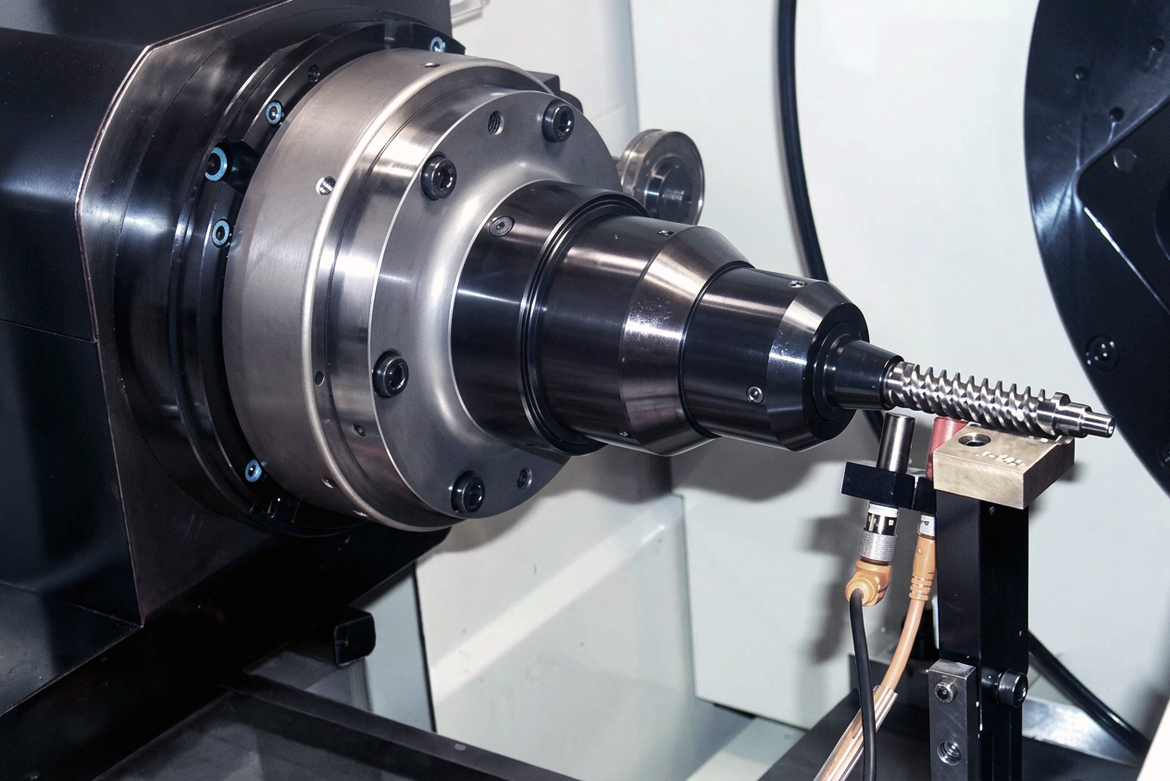
Grinding of a steering worm gear. In electromechanical power steering systems, a worm gear reduces the motor speeds of the servo motor – a growing market with increasing demands for smooth operation and precision.
3. Who invented it?
The operating principle of the worm gear is over 2,000 years old. Archimedes of Syracuse (287–212 B.C.) is credited with the idea of the “endless screw,” which let a crank move heavy loads. That’s the basic principle of the worm and wheel. Leonardo da Vinci took the concept further around 1500: His sketchbooks contain surprisingly modern depictions of worm gears, including a globoid worm shape that distributes tooth engagement across multiple teeth.
The worm gear finally reached industrial maturity in the 19th century, as machine tool technology emerged. Precision milling and grinding made it possible to manufacture worm profiles accurate enough to transmit high power reliably. To this day, a worm gear’s performance depends on the manufacturing quality of the worm and the worm gear.
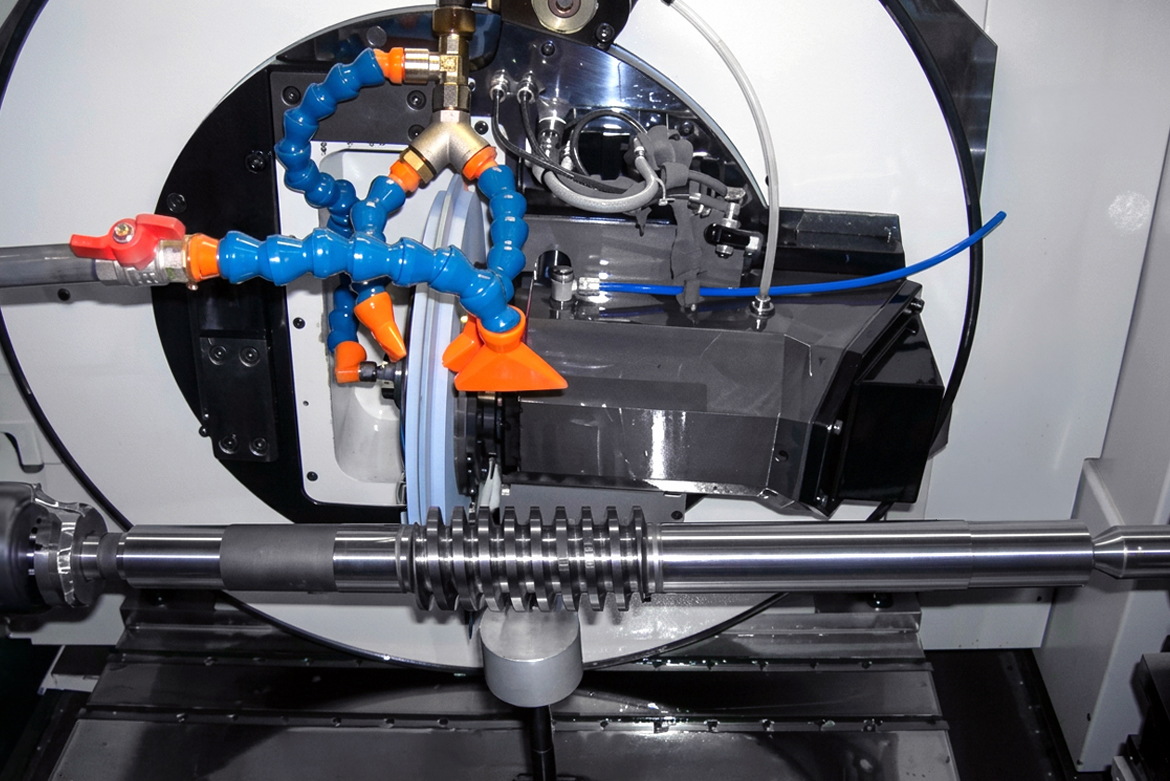
Grinding of a duplex worm gear whose tooth thickness varies continuously along its length. By axially shifting the gear, the backlash in the worm gear can be precisely set and adjusted.
4. What are the advantages and disadvantages of the worm gear?
The key advantages are clear: The worm gear achieves very high gear ratios in a single stage, so the design is exceptionally compact. Its sliding tooth engagement makes it one of the quietest gear designs available, an advantage that matters more and more as equipment is expected to run quieter. Other benefits include potential self-locking capability as an integrated safety feature (which can eliminate the need for a brake), effective damping of shocks and vibrations in the drive train, and the 90-degree angle change, which is often a welcome design feature.
These advantages are offset by inherent physical disadvantages. Sliding friction reduces efficiency; nevertheless, worm gearboxes perform significantly better in terms of efficiency than their reputation suggests and are superior to bevel gearboxes in many respects. Only spur and planetary gearboxes, which lack axial misalignment, outperform worm gearboxes. For continuous operation, high-performance operation, and maximum energy efficiency, these gearbox designs are often the better choice. But as a compact, robust, durable, and quiet reduction gearbox, the worm gearbox is hard to beat.
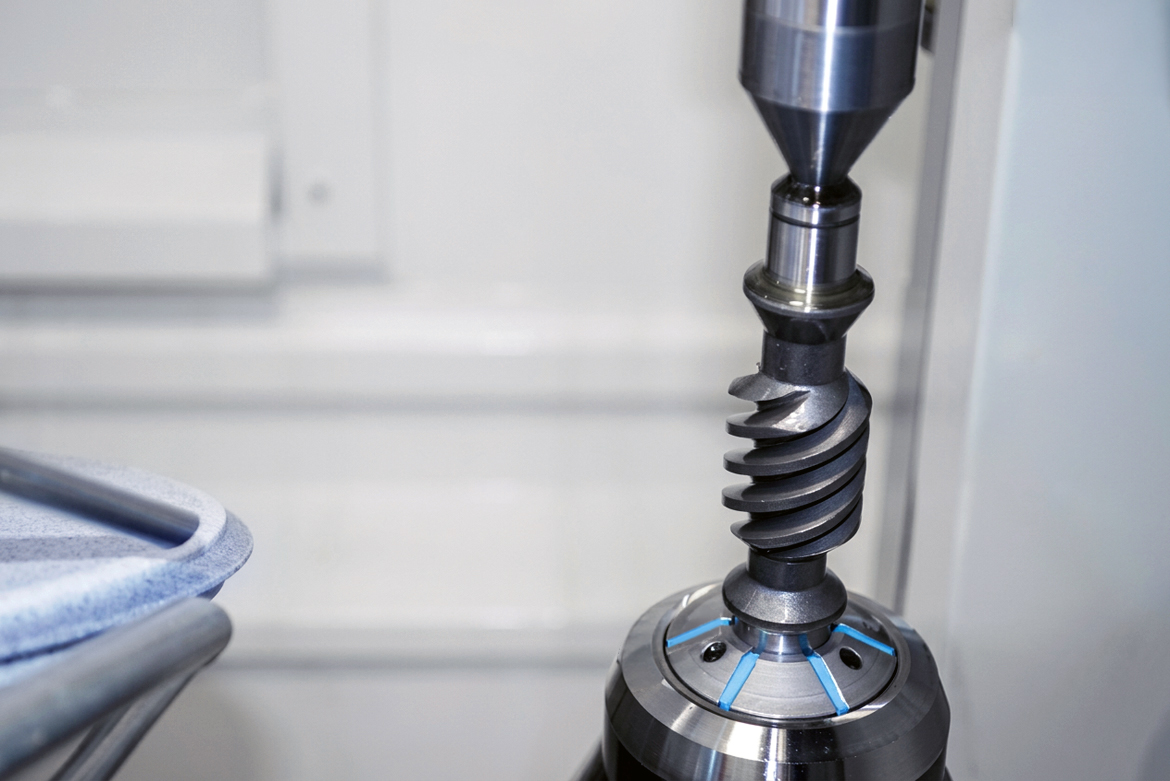
A grinding worm shaft for a gearmotor on EMAG’s high-productivity, twin-spindle GR 250 machine. The tooth flanks are ground with an accuracy of just a few micrometers – the foundation for quiet, long-lasting worm gearboxes.
5. What does the future hold?
The worm gear is a classic with growth potential, and the primary driver is electrification. Small worm gears are at work in electromechanical steering systems, electric parking brakes, seat adjustments, and countless other actuators in modern vehicles and production volumes rise with every new vehicle model. Requirements are rising too. In quiet electric vehicles, noise and vibration behavior (NVH) is taking center stage, which further raises the demands on profile accuracy and surface finish of the worm shaft. Special designs are also gaining importance, such as the duplex worm, whose tooth thickness varies continuously along its length. Shifting it axially lets you precisely adjust the tooth clearance in the gear, which is ideal for low-backlash precision drives.
For manufacturing, this means: After turning, the worm shaft is profile-milled, and the worm gears are gear-cut. For hardened precision worms, the tooth flanks are then ground to an accuracy of a few micrometers. EMAG’s machines cover the full process chain: from worm and worm gear milling, through profile milling, to worm grinding of all standardized tooth forms (ZA, ZI, ZK, ZN, ZC) as well as duplex worms and special profiles. Various models are available: For individual parts and small- to medium-volume runs, highly flexible horizontal machines handle profile milling and grinding. They’re quick to set up, which makes them a strong fit for high part variety. For large-batch production, EMAG offers vertical profile and gear hobbing machines with ring loaders, which can also mill feather key grooves. High-productivity profile grinding machines with a dual-spindle table for dressable and CBN grinding wheels round out the range of capabilities. The result is worm gear sets built for tomorrow’s demands: quieter, more precise, and longer-lasting.
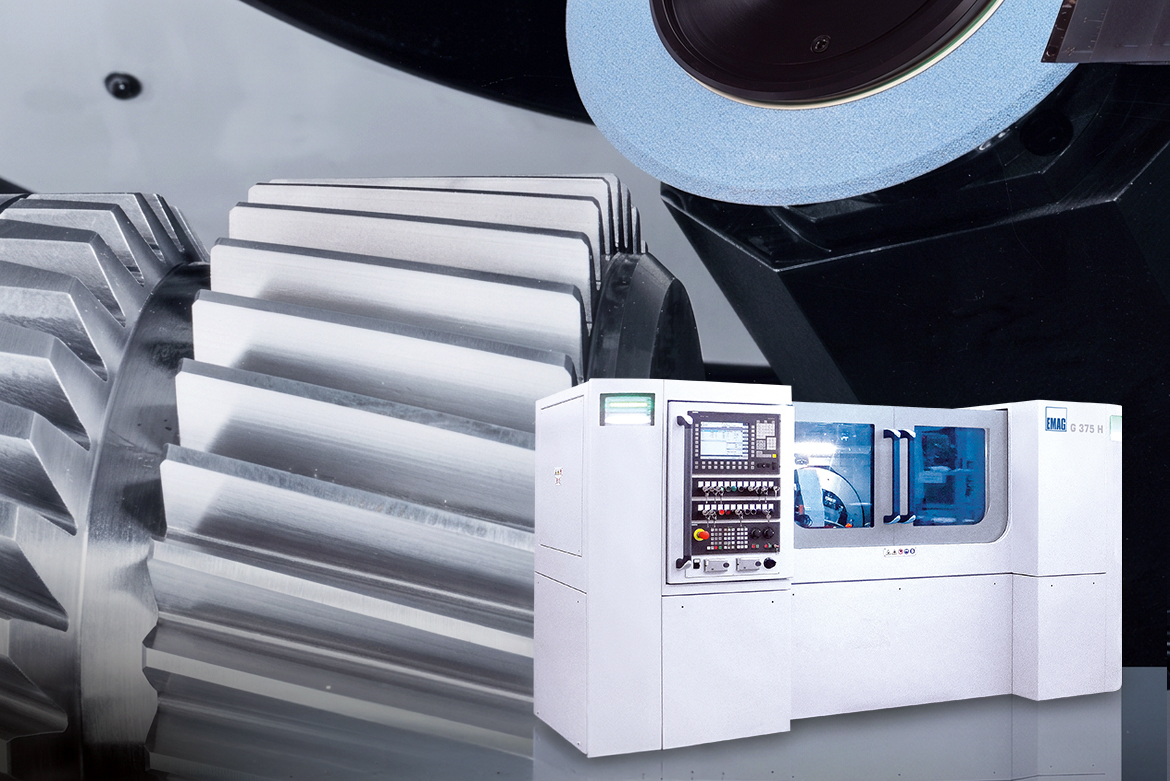
The G 375 H horizontal profile grinding machine performs grinding on worm shafts of all standardized tooth forms as well as duplex and special profiles—with setup times of less than ten minutes.