In the past year, for the first time ever, more than 2 million electric vehicles were sold worldwide as reported by the Center of Automotive Management (CAM). With 60% of the worldwide demand, China is the main driver of this development.
How can commonly mass-produced transmission components, such as planetary gears be produced even more efficiently? The EMAG Group provides a customized answer to this question with the development of the twin-spindle pick-up turning center, VL 1 TWIN. It machines two identical components simultaneously in the same machining area. This technology opens up a wide range of possibilities: When two machines are combined in a line, the planetary gear can be machined from two sides—and all that is completed with shorter cycle times. What exactly does the line solution for planetary gears look like?
Presentations at the EMAG Group’s 2019 Technology Forum
Part 3: Tomorrow’s Mobility—Connected Cars
A guest presentation by Prof. Stefan Bratzel, Center of Automotive Management
Over the next few weeks, this multi-part series will be detailing the contributions of our guest speakers at the EMAG Group’s Technology Forum, to be held on May 15 and 16 in Salach, Germany.
In this blog, we’d like to present the contribution made by Prof. Stefan Bratzel, Director of the Center of Automotive Management (CAM). The CAM is an independent scientific institute for empirical automotive and mobility research, as well as, for strategic advice at the FHDW (university of applied sciences) in Bergisch Gladbach, Germany. The institute’s research mainly focuses on questions for the future, such as e-mobility, networked vehicles, mobility services and autonomous driving. In addition, the Center of Automotive Management jointly awards the yearly AutomotiveINNOVATIONS Award together with PricewaterhouseCoopers (PwC) and thus rewards the year’s most innovative car manufacturer and supplier. The AutomotiveINNOVATIONS study identifies the future trends of automotive groups based on the CAM database of technical innovations in the automotive field.
Presentations at the EMAG Group’s 2019 Technology Forum
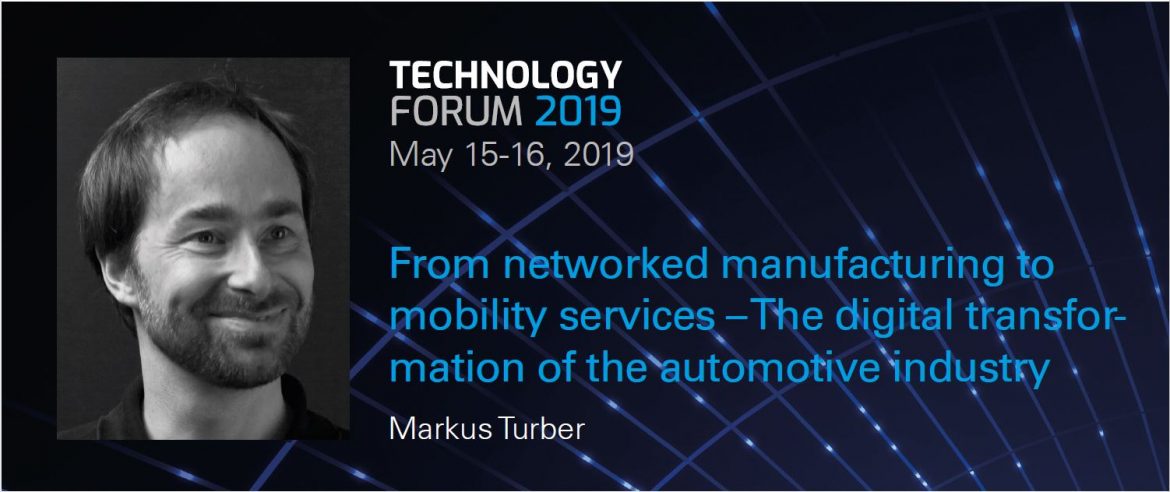
Part 2: From Networked Production to Mobility Services – The Digital Transformation of the Automotive Industry
A presentation by Markus Turber, Managing Director of Intuity Media Lab GmbH
Over the next few weeks, this multi-part series will be exploring the exciting contributions of our guest speakers at the EMAG Group’s Technology Forum, to be held on May 15 and 16 in Salach, Germany.
In this second part, we’d like to highlight our interview with Markus Turber, Managing Director of Intuity Media Lab.
The digital and electric transformation is coming to the automotive industry—and it’s coming fast. How should manufacturing companies prepare for this? And which production solutions are most geared towards the future? Renowned experts will provide answers to these questions, and more, at the 2019 EMAG Technology Forum to be held on May 15 and 16 in Salach, Germany. Participants can expect an innovative event format that allows plenty of time for practical application examples.
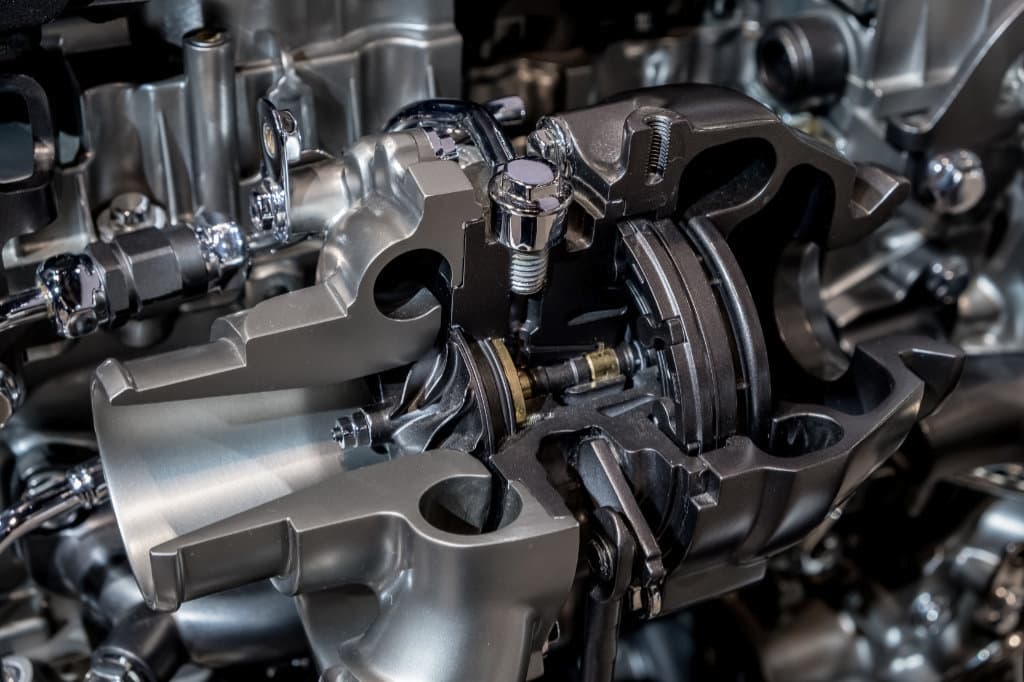
Historically, the power of a car’s engine was dependent on the number and size of cylinders – today, that’s a thing of the past! Electronic engine control, turbochargers or compressors are responsible for the overall performance. The turbocharger has a particularly important role—a Swiss invention dating back to 1925, the turbocharger was used to considerably increase engine power. What distinguishes this component, why is it increasingly important and what are the benefits of using electrochemical machining? —Five interesting facts about turbochargers:
Which sector of industry is the most innovative in Germany? A very comprehensive answer to this question has been provided in the report entitled “Innovation in the German Economy” issued by the Center for European Economic Research (Zentrum für Europäische Wirtschaftsforschung GmbH, ZEW). The current issue rewards automotive manufacturing, among others, with a good score. According to the report, the automotive industry has the highest amount of innovation in its production (48.3%). Innovation is fundamental to the automotive industry’s economic success. Additionally, the industry’s “innovation expenditure” identified by the ZEW is increasing. In 2016, this was valued at 47 billion euros and, according to estimates; it should increase to nearly 55 billion euros by the end of this year.
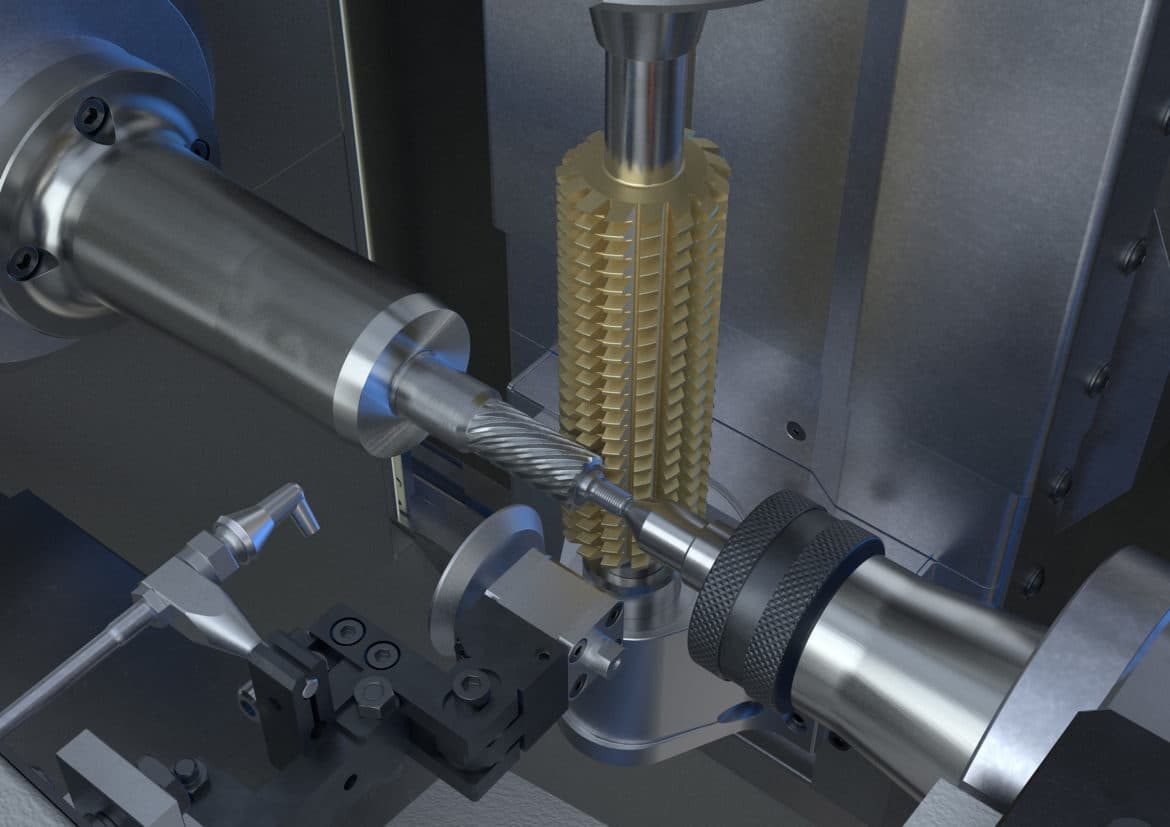
Electric power steering has become standard in the manufacturing of automobiles. The technology guarantees very precise steering support for every type of vehicle, high-end driving comfort, and lower energy consumption in the steering system, which has a positive effect on the car’s CO2 consumption.
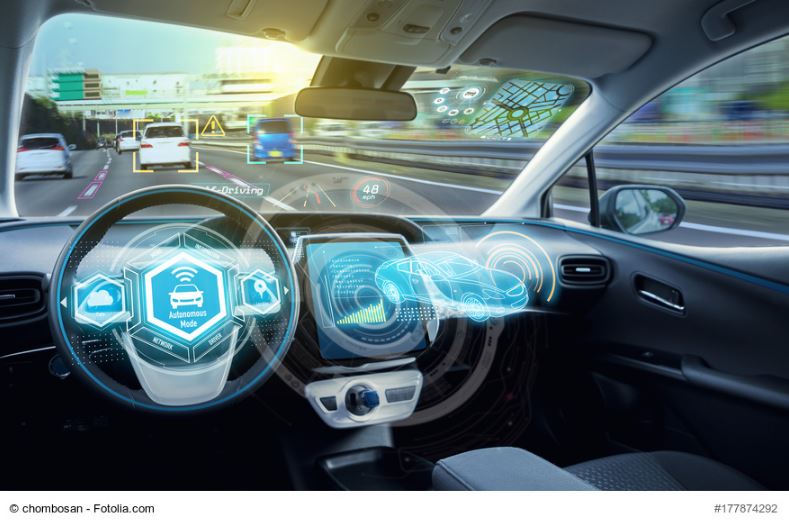
The revolution in car manufacture is happening subtly: Our cars are mastering an increasing number of situations without driver intervention. There is a large number of assistance systems which keep the vehicle on track or avoid obstacles. Recent models even park independently or drive into the garage. This requires the driver to take their hands off the steering wheel entirely. Experts divide the current development into phases: The assistance systems described above have already become a reality. As a partially automated system, parking assistance belongs to phase two. In a few years, fully automatic, driverless operation will follow as the last phase.
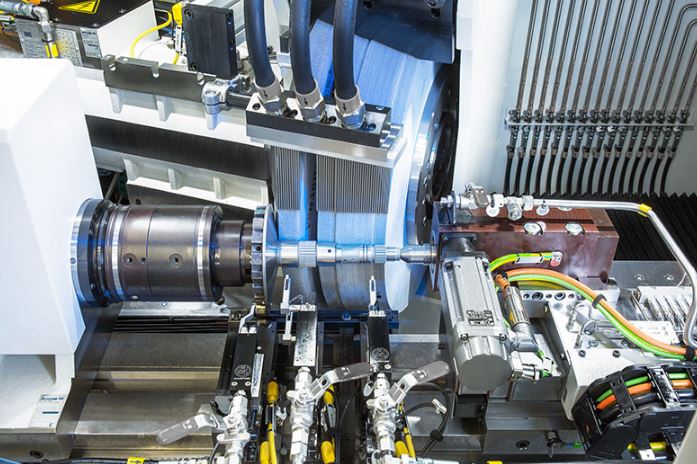
Cylindrical grinding on driveshafts and transmission shafts has always been particularly demanding, as the parts feature a wide range of geometric details that are machined with high precision in the grinding machine. With the rapid pace of technological development in the automotive industry, which keeps increasing the functional density of many components, there are more demands than ever on the design of grinding machines today. Users require highly customized machines that can perform multiple grinding operations, including combined internal and external grinding.