07/10/2026 - Oliver Hagenlocher - Press
Vertical turning and grinding center for the precision machining of small chucked components
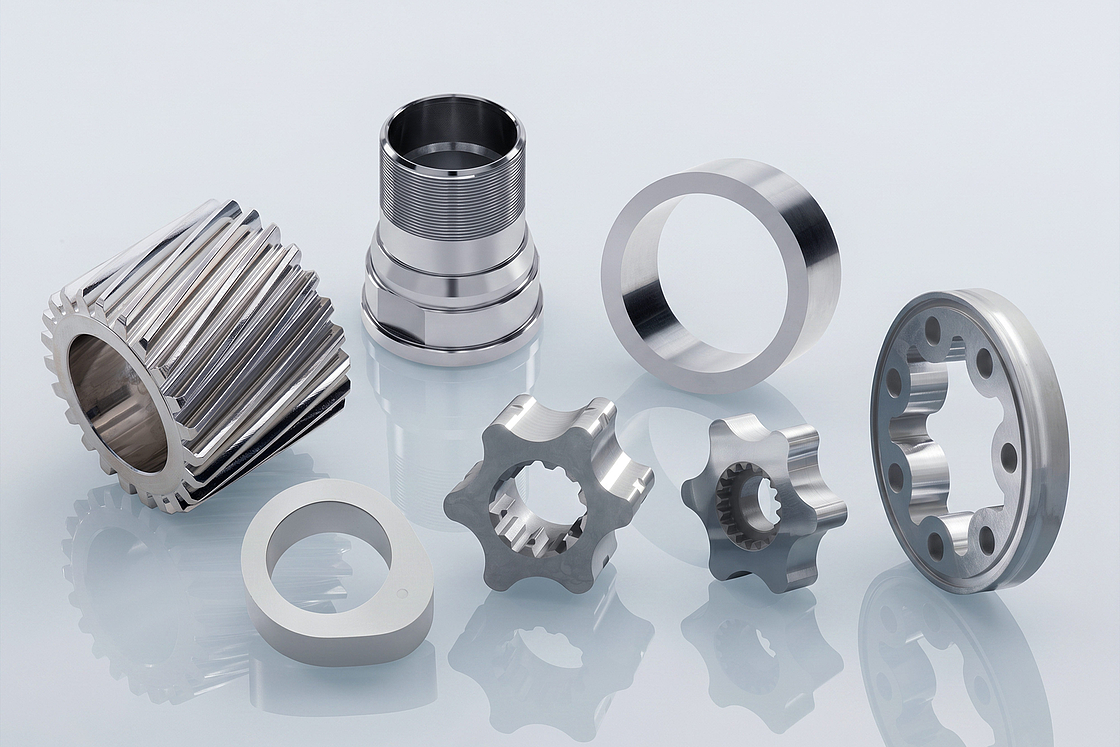
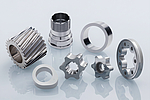
Gear wheels, planetary gears, sprockets, pump rings, individual cams, and wave generators: These chucked components are produced in the millions for medium- and large-volume production. After hardening, each workpiece undergoes precision machining, where dimensional accuracy, surface finish, and positional tolerances must simultaneously be maintained. With the VL 100 GT, EMAG offers a vertical turning and grinding center that combines hard turning, internal grinding, and external grinding for workpieces with a diameter of up to 100 mm in a single setup – with a footprint of approximately 9.6 square meters.
Images


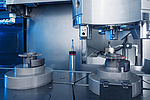
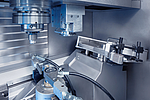
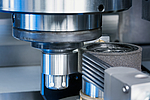
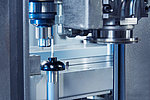
Vertical Design and MINERALIT® Machine Base
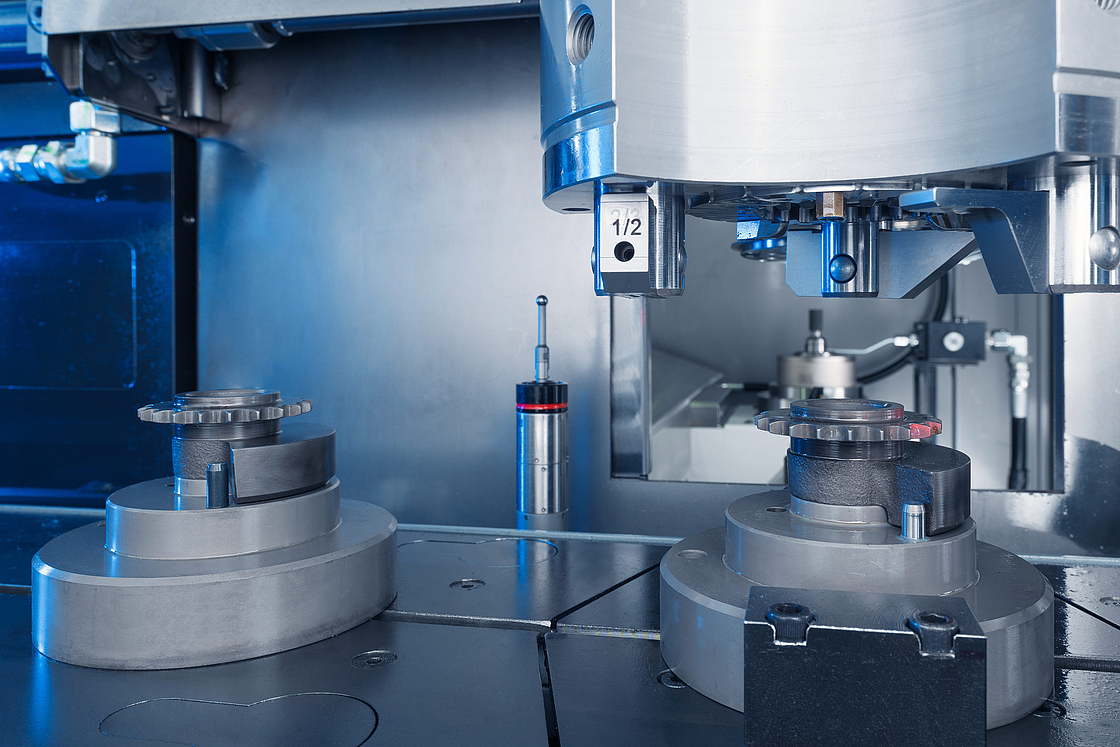
The VL 100 GT operates with the vertical machining principle: The workpiece spindle is positioned above the work area and picks up the workpieces from the integrated conveyor belt using a pick-up process. Chips and grinding slurry fall freely downward by gravity without accumulating on the workpiece or the guideways. This reduces thermal interference, prevents surface damage, and minimizes cleaning requirements. User-friendliness is also a top priority with the VL 100 GT: The ergonomically designed work area enables short setup times, and the compact footprint allows for the operation of multiple machines.
The machine base is made of MINERALIT® polymer concrete, offering eight times greater vibration damping than conventional cast iron. In fine machining, where surface roughness values in the range of Rz < 1.2 µm are required, this damping is a critical factor in achieving quality. The resulting surfaces are free of distortion and meet the requirements for highly stressed functional surfaces in gearboxes.
Integrated Pick-up Automation
The main spindle handles loading and unloading on its own: It moves to the pick-up station, picks up a raw-part from the circulating conveyor belt of the O-Automation system, moves it into the work area, returns the finished part after machining, and immediately picks up the next raw-part. Separate loading robots or gantry loaders are no longer needed, nor are the associated capital investments. The short travel distances ensure very short chip-to-chip times.
Alternatively, the VL 100 GT can be equipped with shuttle automation for link-up of production lines. In combination with EMAG lathes from the VL or VT series, it is suitable, for example, for manufacturing systems ranging from soft turning to hard finishing.
Freely Configurable Work Area
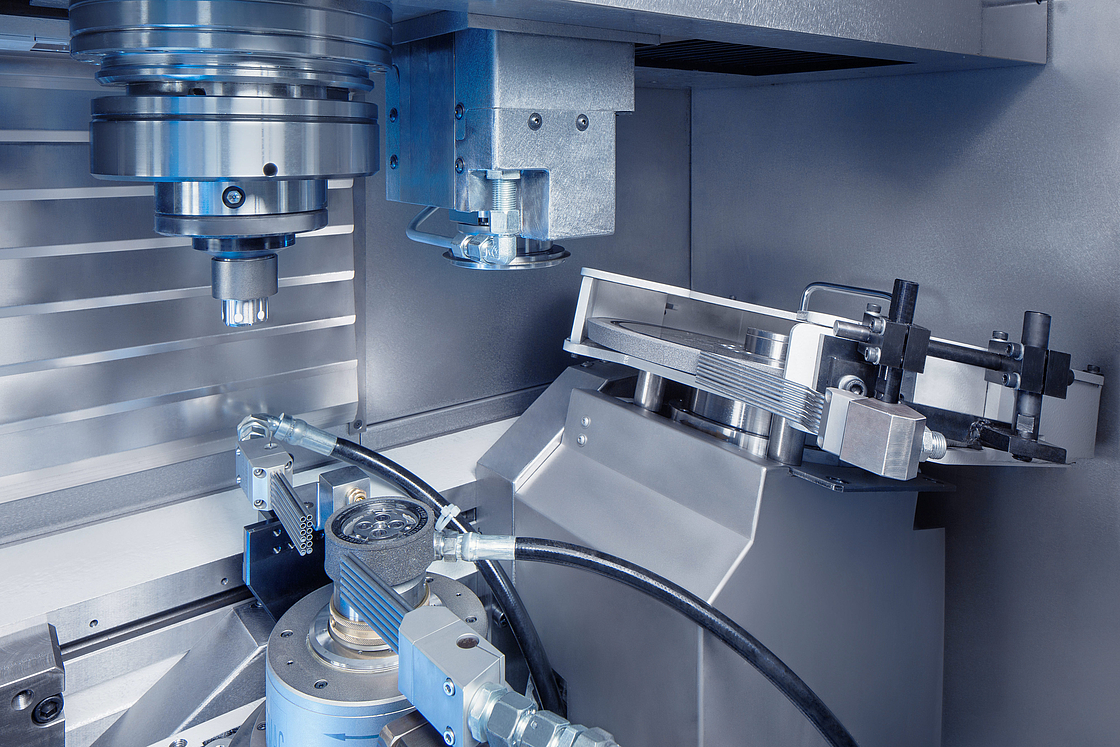
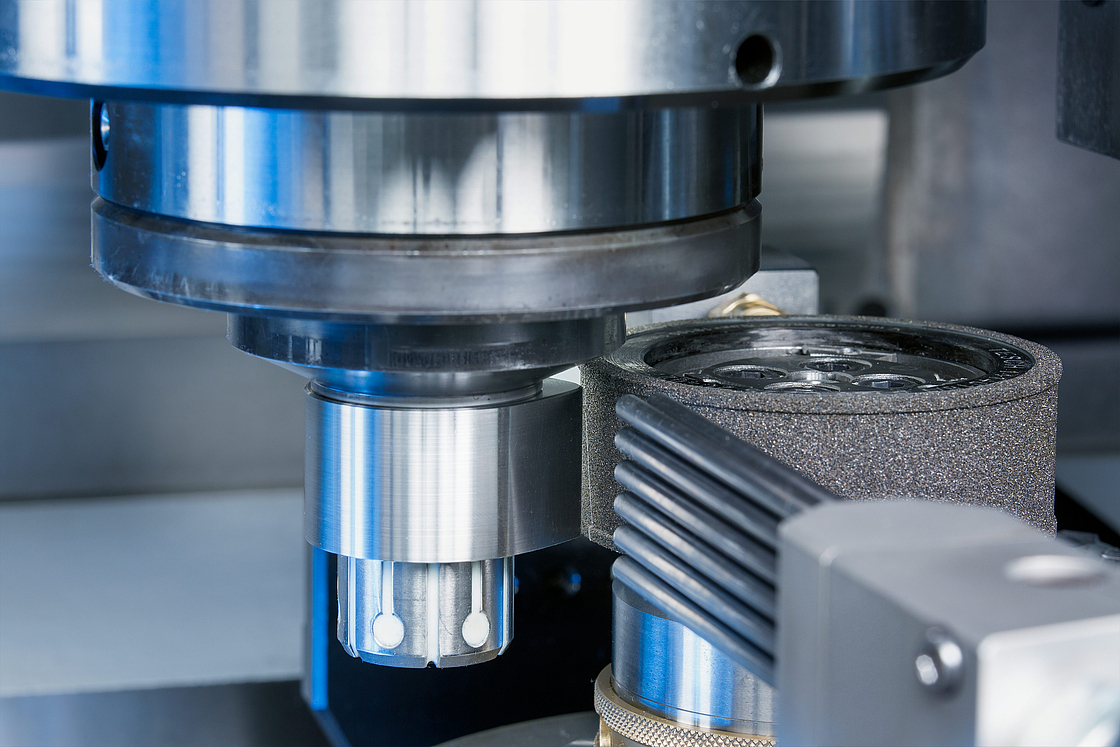
The work area is tailored to the specific workpiece range in consultation with the customer. Available options include internal grinding spindles for bores (corundum or CBN), external grinding spindles for cylindrical surfaces, flat shoulders, and contours, as well as one or two solid steel holders for hard turning operations. This results in configurations ranging from pure internal grinding to a combination of turning and grinding, all the way to complete-machining with turning, internal grinding, and external grinding in a single setup.
A linear motor drive on the X-axis enables the out-of-round grinding of cam profiles and eccentric surfaces. Since the direct drive has no reverse play by design, form errors are avoided during the constant direction changes of the axis. This is a decisive advantage over ball screw drives. Added to this are higher acceleration values and no-wear operation.
Combined Machining: Cost-Effectiveness and Quality
The combination of hard turning and grinding in a single setup is a key advantage of the VL 100 GT. In the first step, end faces, chamfers, and flutes are produced by hard turning. These operations are completed much faster by turning than by grinding. Subsequently, the high-precision geometric features – such as bores, O/D (Outer Diameter), and running surfaces – are finished by grinding in the same setup. The hard pre-turning leaves only a few micrometers of stock for the grinding process. This approach significantly shortens the total machining time and eliminates reclamping errors, ensuring the positional relationships between machined surfaces with the highest accuracy. The low material removal during grinding reduces wheel wear, extends dressing intervals, and lowers tooling costs. At the same time, the volume of grinding slurry decreases, which minimizes disposal costs and simplifies the treatment of cooling lubricants. Dry machining is possible in certain configurations.
Grinding Sensors, Process Control, and Measurement Technology
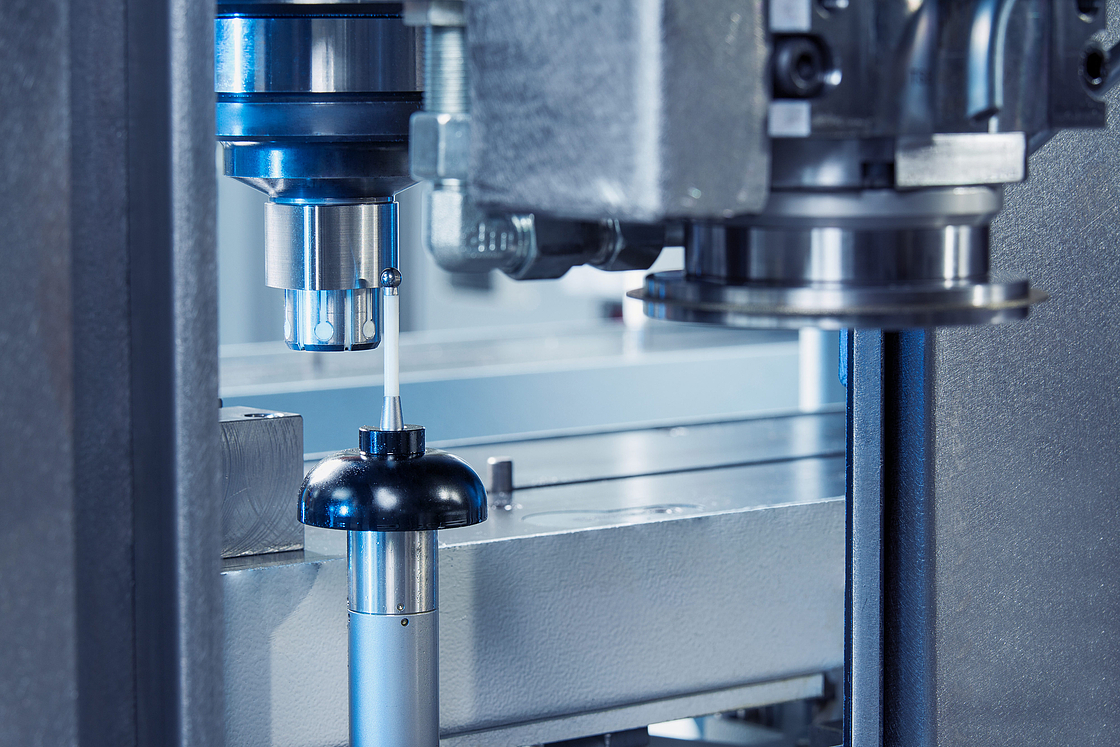
A structure-borne sound system enables contact detection between the grinding wheel and the workpiece, as well as between the dressing roller and the grinding wheel. Adaptive process control monitors the grinding process in real time and adjusts the feed rate to the current machining conditions. Touch dressing is possible. The measuring probe, positioned between the work area and the pick-up station, is protected from contamination. Since the workpiece remains in the setup, measurements can be taken before, after, and between individual machining steps.
Practical Example: Sprocket in 35 Seconds
A specific application demonstrates the machine’s capabilities: After automatic loading, the bore is finished with a CBN grinding wheel. Subsequently, two block-type tool holders perform machining of the end faces via hard turning. Finally, the integrated measuring probe checks the quality. The entire process takes less than 35 seconds, of which about 10 seconds are spent on workpiece changeover, 15 seconds on hard turning, and 10 seconds on grinding.
Key Technical Specifications
Workpiece dia. up to 100 mm, chuck dia. up to 160 mm, swing dia. 210 mm. x-axis travel 895 mm, z-axis travel 375 mm. Main spindle: 16.7 kW / 74 Nm (40% duty cycle), maximum speed 3,000 min⁻¹, spindle bearing Ø 80 mm.
The VL GT series
The VL 100 GT, the VL 200 GT (up to 200 mm), and the VL 350 GT (up to 350 mm) together form a comprehensive machine family with identical operating philosophies and compatible control software. Thanks to the modular design based on the VL platform, identical base machines can be configured for different manufacturing tasks without requiring separate spare parts inventories or new operating concepts.
Interlocuteurs

Oliver Hagenlocher
Zone
Press and Communication